Spring Allergies Are Wrecking Tysons Skin — Here's the Fix

Every spring in Northern Virginia, the same thing happens. The pollen counts climb, the antihistamines come out, and somewhere between the sneezing and the watery eyes, your skin quietly falls apart. Redness that wasn't there in February. Dryness that no moisturizer seems to fix. A tightness or sensitivity that makes your usual routine feel like you're applying sandpaper. If you've been chalking it up to stress or seasonal dryness, it's worth looking more closely — because allergy season and skin sensitivity are more connected than most people realize.
Understanding when allergy season starts in Virginia helps explain the timing. Tree pollen typically begins in late February or early March, peaks through April, and then hands off to grass pollen through May and June. By the time most people notice their skin is off, they've already been exposed to weeks of environmental triggers. The histamine response that drives allergy symptoms — sneezing, congestion, itching — also affects the skin. Elevated histamine levels can increase inflammation throughout the body, compromise the skin barrier, and leave skin more reactive than usual. Add in forced-air heating transitioning to air conditioning, wind exposure, and the dehydrating effects of antihistamine medications, and you have a reliable recipe for a skin barrier that simply isn't functioning properly.
What does that look like in practice? For many Tysons clients, it shows up as persistent redness or flushing that didn't exist through the winter. Some notice new breakouts appearing in unusual patterns — not the hormonal kind, but more scattered and inflamed. Others experience what's often described as reactive skin: products that worked perfectly for years suddenly sting or cause irritation. Existing conditions like rosacea often flare significantly during peak pollen periods, as the inflammatory environment makes everything harder to manage. And for anyone dealing with hyperpigmentation or uneven tone, spring inflammation can make those concerns more visible and more resistant to treatment.
The skin barrier is the central issue. When it's functioning well, it keeps moisture in and irritants out. When it's compromised — by allergens, inflammation, medication side effects, or over-aggressive at-home products — it stops doing its job. Skin becomes more permeable, more reactive, and more prone to trans-epidermal water loss. The frustrating part is that the instinct to do more — exfoliate, try a new serum, add a mask — often makes things worse. What compromised skin needs is restoration, not stimulation.
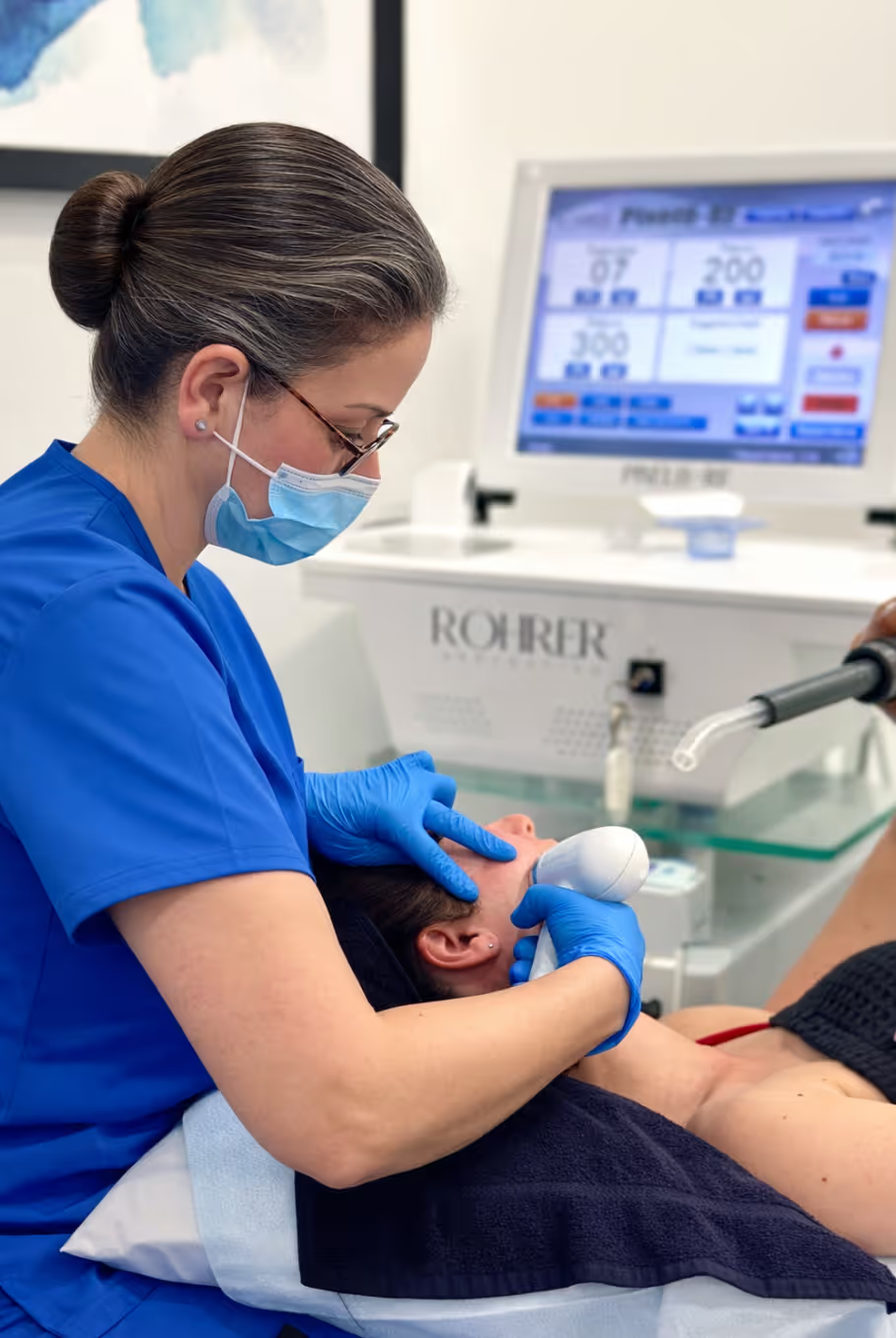
This is where professional guidance makes a meaningful difference. The team at Tysons Elite Esthetics has more than 70 combined years of experience in medical aesthetics, and they understand that allergy season isn't just a nuisance — it's a genuine clinical variable that affects how your skin responds to treatment and what it needs right now. A consultation during this time of year often involves reassessing your current routine, identifying which products are contributing to reactivity rather than solving it, and determining whether an in-office treatment can help accelerate barrier restoration.
Some of the most effective approaches for allergy-aggravated skin sensitivity involve calming inflammation and supporting the skin's natural repair process rather than pushing for dramatic results. The Oxifusion Facial is one option worth considering — it delivers oxygen, hydration, and nutrients to depleted skin without the kind of mechanical stimulation that can further stress a compromised barrier. For clients dealing with persistent redness or rosacea-like flaring, targeted treatment for redness and flushing addresses the underlying vascular component rather than simply masking it.
Exosome therapy is another modality that's particularly well-suited to spring skin concerns. Tysons Elite Esthetics is the only med spa in Northern Virginia authorized to use Human Progenitor-Derived Exosomes — a distinction that matters when you're dealing with skin that's inflamed and in need of genuine cellular-level repair. Exosome treatments work by delivering growth factors and signaling proteins that support regeneration and reduce inflammation — not by forcing the skin to produce a stress response, but by giving it the biological tools to heal more effectively. For sensitized, allergy-aggravated skin, this approach aligns well with where the tissue actually is, rather than where you might want it to be in a less reactive month.
It's also worth noting what to pause during allergy season. Chemical peels, ablative laser treatments, and aggressive resurfacing procedures are typically better timed for periods when the skin barrier is intact and resilient. Attempting these during a period of active sensitivity can lead to prolonged redness, slower healing, and results that don't reflect what those treatments are capable of. If you've been considering a VI Peel or CoolPeel Fractional Laser Resurfacing, the right consultation will help you determine whether now is the ideal time or whether a few weeks of barrier repair first will produce meaningfully better outcomes.
For clients managing ongoing redness that predates allergy season — or who notice that each spring seems to push their skin further from baseline — it's worth exploring whether an underlying condition like rosacea is being amplified by seasonal triggers. IPL and laser options for rosacea are most effective when scheduled strategically, and the spring-to-summer window requires careful timing to avoid sun exposure complications. Your provider can map out a plan that addresses both the immediate flare and the longer-term pattern.
Skin sensitivity during allergy season is also a useful signal about your overall barrier health. If your skin is reacting intensely to what should be mild environmental exposure, that often points to a baseline barrier function that could be stronger year-round. Treatments like skin booster injections and Profhilo work beneath the surface to improve hydration, elasticity, and resilience — not just for allergy season, but as a foundation for how your skin handles every seasonal transition that follows.
The clients who manage spring reactivity most effectively tend to be the ones who don't wait until their skin is deeply inflamed to seek guidance. They come in when they notice the first signs — the tightness, the unusual flushing, the products that suddenly aren't sitting right — and work with their provider to get ahead of it rather than chase it. That kind of proactive relationship is exactly what the team at Tysons Elite Esthetics is built for. Every treatment feels thoughtfully selected and tailored specifically for the skin in front of them — not a protocol designed for some other season or some other client.
If your skin has been telling you something is off since the trees started blooming, that's worth paying attention to. A conversation with someone who understands both the clinical picture and the seasonal context is the most efficient path back to skin that looks and feels like itself.
Start your transformation
Schedule your consultation with our knowledgeable and friendly team.