IPL Photofacial Results: How Many Sessions Until You See Change?

One of the most common questions we hear before a first IPL photofacial appointment is some version of: "How long before I actually see something?" It's a fair question — and one that deserves a more honest answer than "results vary." They do vary, but not randomly. How quickly you see change from intense pulsed light treatment depends on a handful of factors that a skilled clinician can assess well before your first session. Understanding those factors is what separates a thoughtfully designed treatment plan from a series of appointments that leaves you guessing.
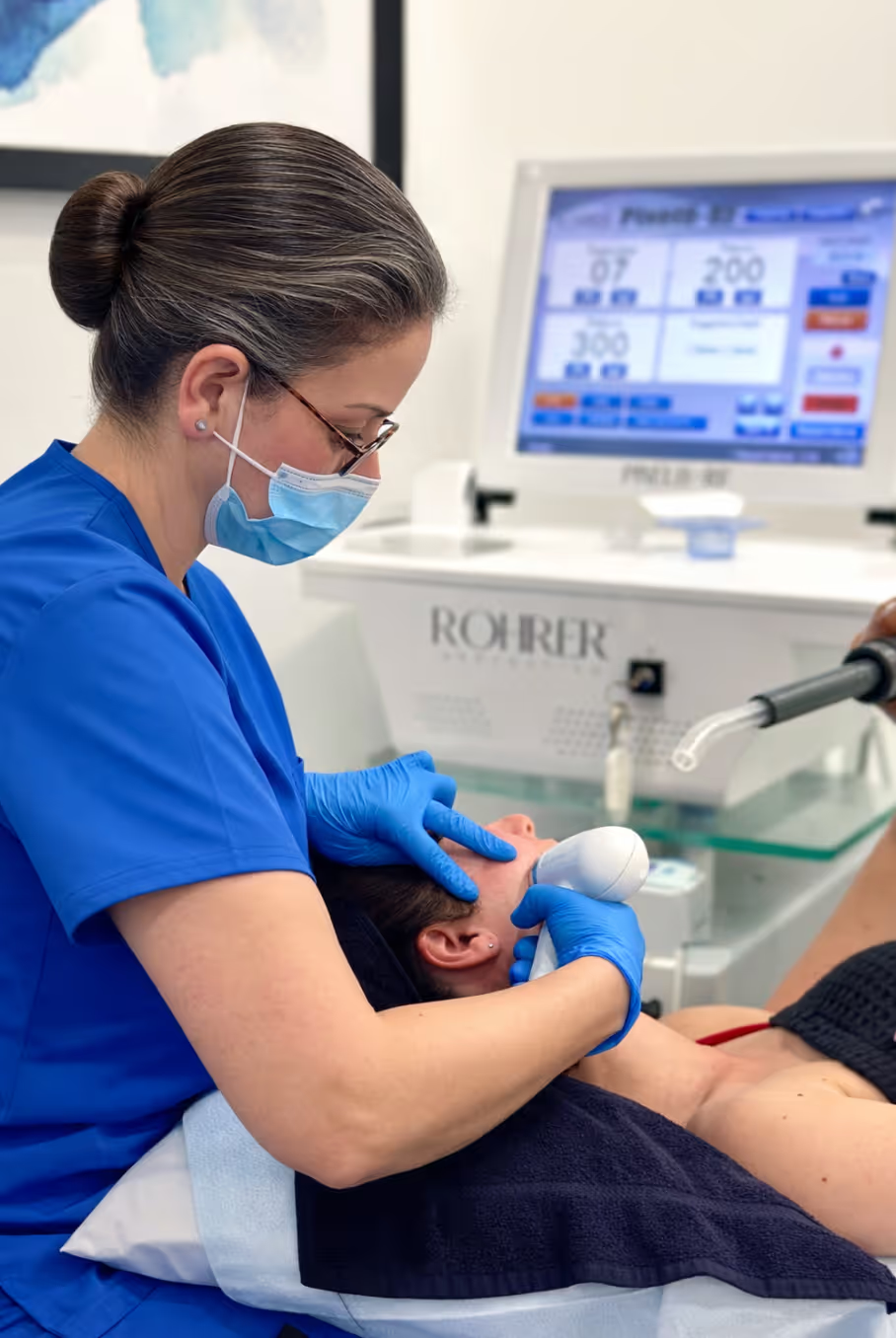
IPL, or intense pulsed light, works by delivering precisely calibrated wavelengths of light into the skin. Those wavelengths are absorbed by chromophores — the pigmented targets in your tissue, including melanin in sunspots and hemoglobin in broken capillaries and redness. The body then processes and clears that damaged pigment over the weeks following treatment. Unlike ablative lasers that resurface the skin's surface, IPL works beneath it, making it particularly well-suited for clients who need meaningful correction without significant downtime. At Tysons Elite Esthetics, our team uses IPL for sun damage, uneven skin tone, redness, rosacea-related flushing, and general photo rejuvenation — and the way we approach each of those concerns shapes how we set session expectations from the very start.
What typically happens after your first session
For most clients, the first session produces subtle but noticeable changes. Brown spots — particularly superficial sun damage accumulated over years of exposure in the Virginia sun — will often darken before they fade, a process sometimes called "peppering." This is not a complication; it's the treatment working. Those darkened spots gradually slough away over seven to fourteen days, revealing more even skin beneath. Redness and visible capillaries often appear calmer within two to three weeks of the first appointment, though the degree of change depends on how chronic and deep-seated the vascular component is.
It would be misleading to tell every client they'll see dramatic results after a single session. Some do. Clients with mild, relatively recent sun damage and lighter skin tones tend to respond quickly and visibly. Clients with deeper, longer-standing pigmentation, more active rosacea, or a more complex history of sun exposure typically require a series to achieve the kind of correction they're after. Neither scenario represents a failure — they represent different starting points. What matters is that the plan is built around your skin, not around a generic number of sessions that looks good on a service menu.
The standard series: why three to five sessions is a meaningful benchmark
For most clients pursuing comprehensive photo rejuvenation, a series of three to five treatments spaced approximately three to four weeks apart produces the best cumulative result. Each session builds on the last — clearing surface pigment, addressing vascular irregularities, and gradually improving overall tone and texture. By the end of a full series, clients commonly describe their skin as brighter, more even, and noticeably more youthful in appearance. The results we see align closely with what our clients describe: skin that looks five to six years younger, not because anything dramatic was done, but because years of accumulated damage have been methodically cleared.
Sessions are spaced to give the skin time to complete its clearing cycle between appointments. Coming in too frequently can overwork the tissue; spacing too far apart slows momentum. Three to four weeks is generally the sweet spot, though your clinician may adjust this based on how your skin is responding. This is one reason why having an experienced team — one that actually knows your skin over time — matters in ways that go beyond the technology itself. The device is only as precise as the hands and judgment guiding it.
It is also worth noting that IPL is not a one-and-done treatment, even for clients who reach their goal result. Sun damage is cumulative and ongoing. Northern Virginia summers are not gentle. Clients who treat once and never return tend to find that their progress erodes over time. The clients who maintain the best long-term results typically return for one to two maintenance sessions per year, often timing them in fall when UV exposure decreases — a pattern that fits naturally into a well-considered annual skincare calendar. If you're already thinking about broader skin health planning, our post on preventive skincare for professionals covers how to sequence different treatments over time.
What affects your personal timeline
Skin tone is one of the most important variables in how IPL is calibrated and how quickly results appear. Fitzpatrick skin types I through III — lighter skin tones with higher contrast between the damaged pigment and surrounding tissue — tend to respond most quickly and predictably to IPL. Clients with medium to deeper skin tones (Fitzpatrick IV and above) require more conservative settings to avoid inadvertent pigment changes, which may mean a longer series or a different device combination. This is a nuance that matters: a practice that treats every client identically regardless of skin tone is not practicing medicine — it's running a protocol. Our team's approach is always individualized.
The nature and depth of the concern being treated also shapes the timeline. Superficial freckles and recent sun spots respond faster than deep dermal pigment that has been building for decades. Telangiectasias — the small visible blood vessels common in rosacea — typically require more sessions than surface pigmentation. Clients seeking IPL as part of rosacea management, for example, should expect a longer initial series and ongoing maintenance. For a more detailed look at how light-based treatment fits into rosacea care, our dedicated post on rosacea treatment in Tysons Corner covers the full range of options and how they work together.
Your skincare routine and sun protection habits between sessions also affect your results more than most clients expect. Arriving to follow-up appointments with a tan — even a light one — affects how IPL energy is distributed in the tissue and can increase the risk of unwanted pigment changes. We recommend strict sun avoidance and daily broad-spectrum SPF between sessions, not as an afterthought, but as an integral part of the treatment plan. If you've been uncertain about which sunscreen products are genuinely protective for your skin type, our post on sunscreen ingredients that harm sensitive skin is worth reading before you start.
IPL as part of a broader skin strategy
IPL excels at correcting tone, clearing pigmentation, and reducing vascular redness — but it isn't a skin tightening treatment, and it doesn't address textural concerns like fine lines, enlarged pores, or mild scarring the way radiofrequency microneedling or laser resurfacing does. For clients in their 40s, 50s, and beyond who are dealing with both tone irregularities and early signs of laxity, IPL is often most effective when it's one component of a layered strategy rather than the entire plan.
We frequently combine IPL photo rejuvenation with Pixel8-RF radiofrequency microneedling for clients who want to address both tone and texture in the same treatment cycle — not necessarily on the same day, but within a coordinated plan. CoolPeel Fractional Laser Resurfacing addresses a different depth and intensity of damage and may be recommended for clients with more significant sun damage or textural irregularities. The right combination depends entirely on what your skin needs, which is exactly the kind of assessment our team makes during a thorough consultation. For a broader look at how energy devices compare, our post on RF microneedling vs. laser resurfacing covers the key distinctions in practical terms.
Sun damage also doesn't stay invisible forever. Years of exposure that looks unremarkable now often becomes visible pigmentation and textural aging years later — a pattern we've written about in depth in our post on why sun damage shows up years later. Starting IPL before that damage becomes severe is meaningfully easier — and produces better results — than waiting until correction requires more aggressive intervention.
What a consultation actually tells you
The only way to give you a truly accurate session estimate is to see your skin in person. A photograph tells part of the story; a clinical evaluation with proper lighting and, in some cases, imaging technology tells the rest. At Tysons Elite Esthetics, consultations are not sales conversations — they're assessments. The goal is to understand your skin's history, your concerns, your timeline, and your lifestyle, and to build a plan that makes sense for all of those things together.
Some clients come in expecting to need five sessions and leave knowing they'll respond quickly with three. Others arrive hoping for a single-session transformation and benefit from a candid conversation about why a more measured approach will serve them better. That kind of transparency is something our clients consistently describe as one of the things they value most — the sense that they're getting real information from people who genuinely know their field, not a pitch designed to sell packages. With a team carrying 70+ years of combined experience in medical aesthetics, the depth behind those conversations is real.
If you're considering IPL photofacial treatment and want to understand what a realistic plan would look like for your specific skin, the best starting point is a conversation with our team. We're located in Tysons, Virginia, and serve clients throughout McLean, Vienna, Falls Church, and the broader Fairfax County area.
Start your transformation
Schedule your consultation with our knowledgeable and friendly team.