Polynucleotides vs. Skin Boosters: Which Injection Wins for Hydration?

If you've been researching injectable hydration treatments, you've likely come across two names: polynucleotides and skin boosters. Both are injected into the skin. Both promise a more hydrated, smoother, healthier-looking complexion. And both are genuinely effective — which is exactly what makes the comparison worth having.
The distinction between them isn't just technical. It shapes who gets the better result, how long that result lasts, and whether you're addressing the surface of the skin or something deeper. At Tysons Elite Esthetics, these conversations happen every day — not because patients are choosing wrong, but because most haven't been given the information to choose well.
What Skin Boosters Actually Do
Skin boosters are injectable treatments made from hyaluronic acid — the same molecule found in traditional dermal fillers, but formulated differently. Where fillers are designed to add volume and structure, skin boosters use a lighter, more fluid form of hyaluronic acid that disperses through the skin rather than sitting in one place.
The most established options in this category include Restylane Vital and Juvederm Volite. When injected in a series of micro-deposits across the face, neck, or hands, they draw water into the surrounding tissue and create a visible improvement in hydration, glow, and skin smoothness within days. Results are noticeable quickly. Clients often describe their skin as looking plumper, more luminous, and more rested after a single session.
The limitation of skin boosters is that their primary mechanism is physical. Hyaluronic acid holds water — exceptionally well — but it doesn't direct the skin to change how it behaves. Once the product degrades, typically over six to twelve months depending on the formulation and individual metabolism, the results fade. That's not a flaw; it's simply how the treatment works. For clients who want immediate, visible hydration with predictable results and a low recovery burden, skin boosters are a genuinely excellent option.
If you're curious how skin boosters compare to what you're already doing at home, this deeper look at Restylane Vital and Juvederm Volite is worth reading before your consultation.
What Polynucleotides Do Differently
Polynucleotides — often referred to by the abbreviation PDRN, or simply as PN injections — work through a fundamentally different mechanism. Rather than delivering hydration directly, they work at the cellular level to support the skin's own repair and renewal processes.
Polynucleotides are derived from purified DNA fragments, typically sourced from salmon or trout sperm, which share a high degree of biocompatibility with human tissue. When injected into the dermis, they interact with receptors on skin cells — particularly fibroblasts — stimulating collagen synthesis, improving microcirculation, and activating the skin's natural regenerative activity. The result is skin that becomes progressively healthier over time: firmer, more hydrated from within, better textured, and more resilient.
This is an important distinction. Skin boosters bring hydration to the skin. Polynucleotides encourage the skin to generate and retain hydration more effectively on its own.
Because the mechanism is biological rather than volumetric, results from polynucleotide treatments build gradually. Most patients see the most significant improvement after two to three sessions spaced two to four weeks apart. The payoff is durability — many patients report results that persist for a year or longer after a completed course, with the skin continuing to improve even after the treatment phase ends.
For a more detailed breakdown of polynucleotide science and what to realistically expect from a treatment course, this guide on PDRN and PN injections covers the clinical picture thoroughly.
The Hydration Question: Surface vs. Structural
When patients ask which injection "wins" for hydration, the honest answer is that they're addressing two different dimensions of the same problem.
Skin boosters win on immediacy. If your goal is visible luminosity before an event, or you want a noticeable improvement in skin quality that shows up within a week, hyaluronic acid skin boosters are hard to beat. They're also exceptionally well-tolerated, require minimal downtime, and can be used in areas where polynucleotides are not typically indicated — under the eyes, for example, or on the lips.
Polynucleotides win on depth and durability. If your skin has become chronically dehydrated, if you're dealing with fine surface lines that reflect underlying cellular decline rather than just surface dryness, or if your goal is genuine skin health improvement rather than a temporary boost, polynucleotides offer something skin boosters simply cannot: a biological reset. They're particularly well-suited to patients whose skin has lost its ability to hold moisture effectively — a common feature of intrinsic aging after 40 — and to those recovering from cumulative sun damage, stress, or post-treatment skin fatigue.
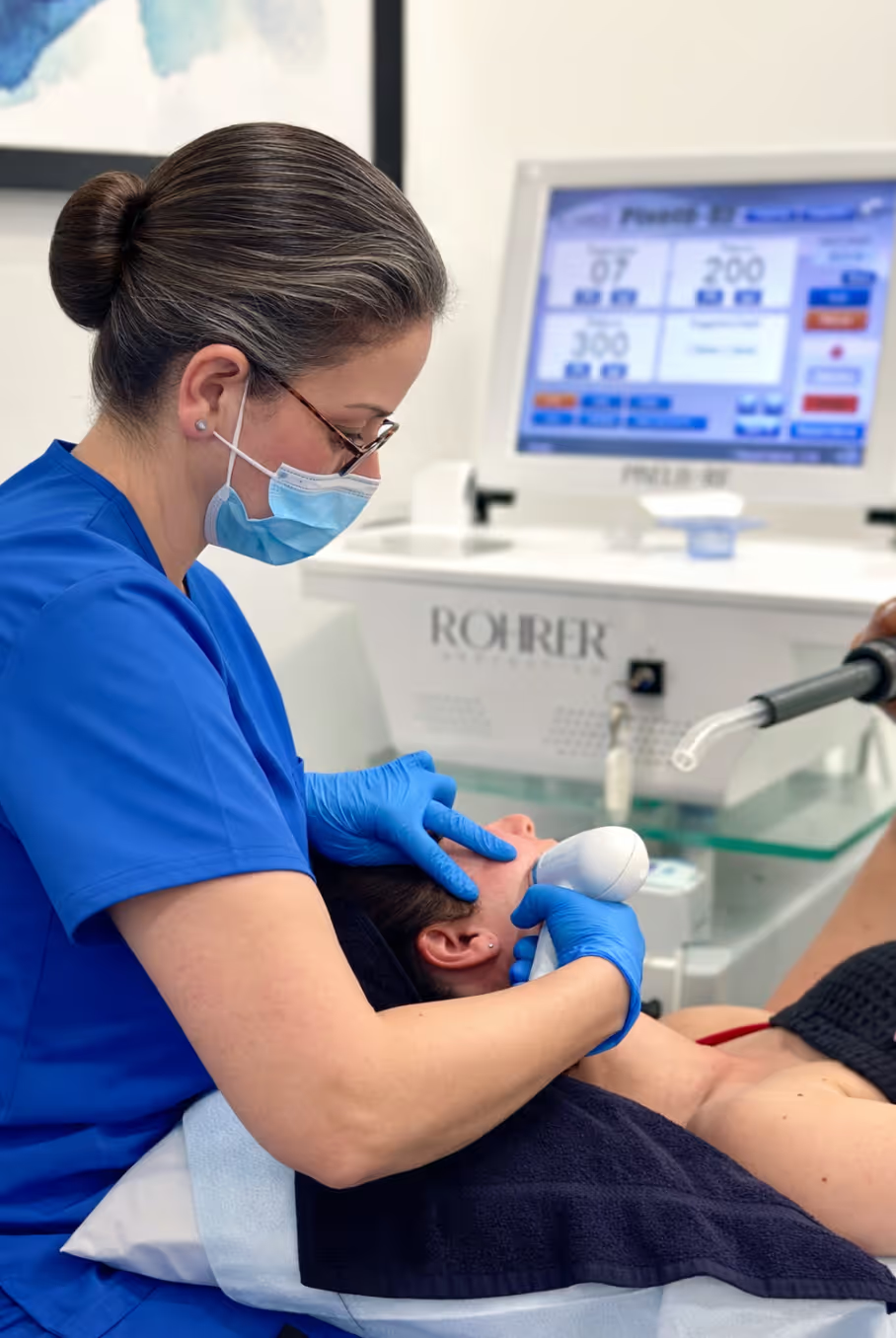
There's also meaningful evidence that polynucleotides support healing and tissue regeneration in ways that make them useful not just as standalone hydration treatments, but as complements to more intensive procedures. Patients undergoing Pixel8-RF radiofrequency microneedling or CoolPeel Fractional Laser Resurfacing may benefit from polynucleotide sessions as part of a recovery and optimization protocol — something the team at Tysons Elite Esthetics factors into full treatment planning.
Who Is Each Treatment Best For?
Skin boosters tend to be the right first choice for patients in their 30s and early 40s who have generally healthy skin but want to address dullness, fine surface dehydration, or the early effects of environmental exposure. They're also well-suited to patients who have had dermal fillers and want to extend the quality of their results between appointments — because well-hydrated skin makes filler look better and last longer. Patients preparing for a specific event, or those new to injectable treatments who want a low-commitment entry point, often find skin boosters to be an ideal starting place.
Polynucleotides tend to resonate with patients who are thinking longer-term — those who want to invest in the structural health of their skin, not just its appearance on a given day. They're particularly relevant for patients over 40 dealing with skin that has lost its baseline vitality: the kind of skin that no longer responds the way it used to to topical products, that looks tired regardless of sleep, or that has developed a fine crepey texture that moisturizers can't touch. Patients with compromised skin barriers, post-inflammatory conditions, or those who have experienced significant volume loss and want regenerative support alongside biostimulators like Sculptra often find polynucleotides complement their broader treatment plan in a way that nothing else quite does.
It's also worth noting that the two treatments are not mutually exclusive. In the right candidate, combining a skin booster for immediate luminosity with a polynucleotide course for deeper regenerative benefit can produce results that neither treatment achieves independently.
What the Consultation Actually Looks Like
The reason this comparison matters is that the right answer depends on your skin — not on what worked for someone else, and not on what's currently trending. At Tysons Elite Esthetics, conversations about injectable hydration happen in the context of a complete skin assessment: what your skin needs now, what it will need in twelve months, and how any hydration treatment fits alongside everything else you're doing or considering.
The team's combined 70+ years in medical aesthetics means these aren't conversations driven by product preference or protocol checklists. They're driven by a genuine understanding of skin biology, long-term results, and what each patient's skin is actually asking for. That's a meaningful difference — one that shows up not just in the recommendations, but in the outcomes.
If you're considering pairing your hydration treatment with microneedling, or you're curious whether your skin would respond better to a regenerative approach that includes exosome therapy, those are conversations worth having before you book. The best injectable isn't the most advanced one — it's the one your skin is ready to use.
If you're searching for polynucleotides injections near me in Tysons Corner, McLean, Vienna, or the greater Fairfax County area, Tysons Elite Esthetics offers consultations where both options are assessed honestly, without a preference for one product over another. The goal is always the same: skin that looks genuinely healthier, not just temporarily better.
Start your transformation
Schedule your consultation with our knowledgeable and friendly team.