Sagging Brow or Drooping Eyelid? Getting the Diagnosis Right

"I look tired" is one of the most common things our clients say when they sit down for a consultation — and it's almost never as simple as it sounds. A heavy brow and a drooping eyelid can look remarkably similar in the mirror, but they come from completely different structural changes, and they require completely different treatment approaches. Get the diagnosis wrong, and you can spend months (and real money) correcting a problem that was never actually there.
At Tysons Elite Esthetics, this is one of the most frequent diagnostic conversations we have with clients across McLean, Vienna, and Falls Church. With a combined 70+ years in medical aesthetics, our team has learned that the upper face rarely ages in one clean line — it ages in overlapping layers, and separating those layers is the difference between a result that looks refreshed and one that looks like you "did something."
Two Different Problems, One Shared Symptom
A sagging brow is a soft tissue and muscular issue. Over time, the frontalis muscle loses tone, the brow bone's supporting tissue descends, and the outer tail of the brow drops — often pressing down on the upper eyelid in the process. This is why many clients with brow ptosis mistakenly believe their eyelid is the problem.
A true drooping eyelid, medically known as ptosis or dermatochalasis, involves the eyelid skin and the levator muscle that controls the lid itself. This is a separate structure entirely from the brow, and no amount of brow lifting will correct true excess eyelid skin or a weakened levator. We covered the distinction in more depth in our guide to non-surgical eyelid rejuvenation, which walks through how Plasma Pen, RF microneedling, and filler each address different layers of the lid.
How We Diagnose It Correctly, Every Time
During your consultation, our team performs a simple but revealing test: we gently lift the brow into its ideal position and ask you to look in the mirror. If the eyelid heaviness resolves completely, the brow is the true culprit. If hooding persists even with the brow lifted, we're looking at genuine eyelid tissue that needs its own treatment plan. This single distinction changes everything about what we recommend next — and it's why we never guess at this stage. It's also why we explore this topic in Aging Around the Eyes: When Filler Stops Being Enough, since volume alone frequently gets blamed for what is actually a structural brow or lid issue.
We also ask about Botox history. A number of clients come to us after forehead treatments elsewhere left their brows feeling heavier, not lighter — a common and correctable issue we address in Forehead Botox Gone Wrong: Fixing Heavy Brows Afterward. Improper neuromodulator placement can mimic — or worsen — true brow ptosis, which is yet another reason an accurate read matters before any needle touches your face.
Treating the Brow
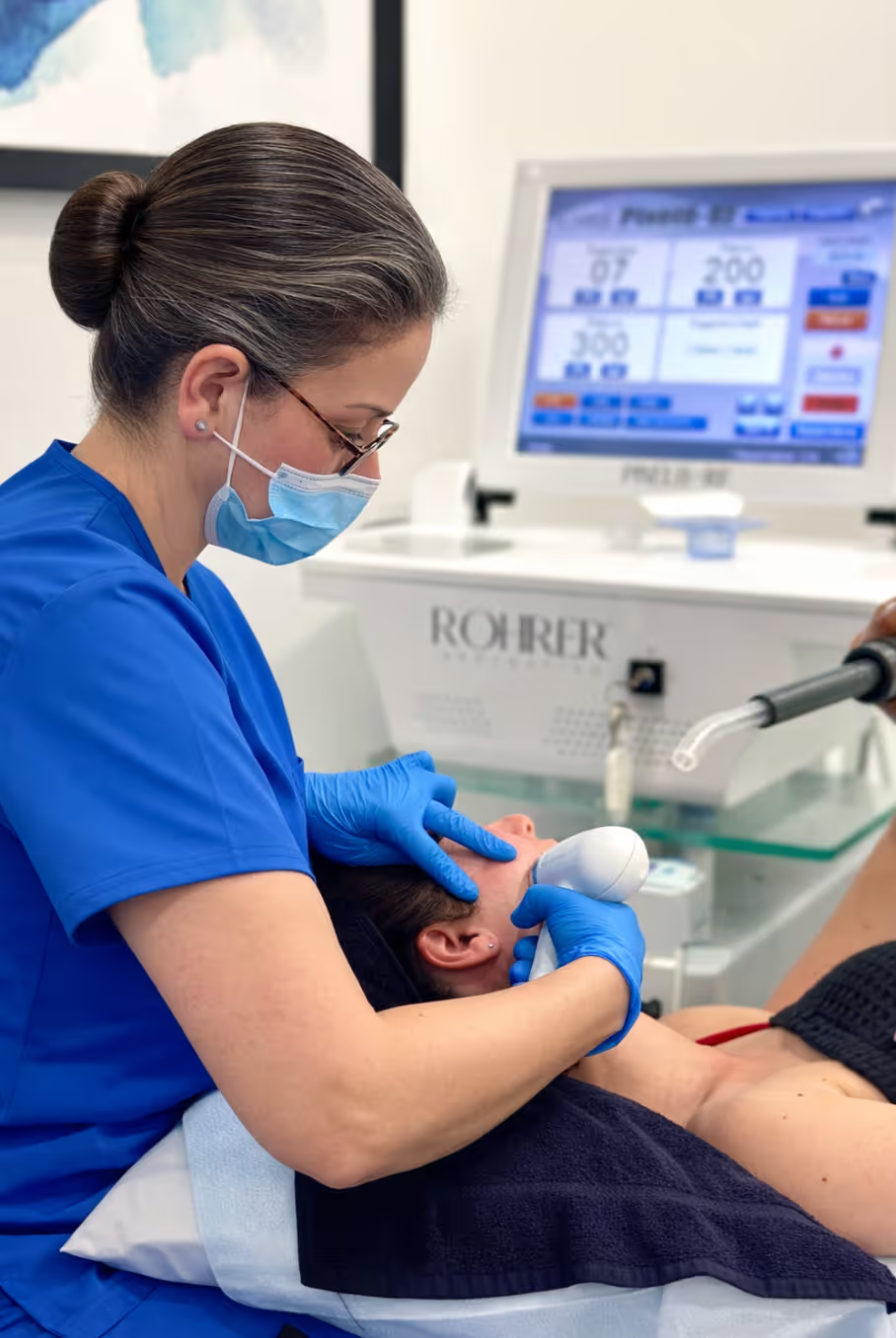
For true brow descent, our approach typically combines precisely placed neuromodulator with strategic filler to restore support at the lateral brow and temple. You can read more about how we approach this non-surgically in our dedicated brow lift guide. For clients with more significant laxity, we often pair this with Pixel8-RF Radiofrequency Microneedling to rebuild collagen support in the forehead and brow region over time, rather than relying on filler alone to hold position.
Treating the Eyelid
When the eyelid itself is the issue — excess skin, crepiness, or mild hooding from tissue laxity — Plasma Pen is often our first recommendation, as it tightens the delicate eyelid skin without surgical incision or significant downtime. In cases involving hollowing beneath the eye in addition to upper lid changes, we may also discuss tear trough filler, since under-eye hollows and upper lid heaviness often appear together and benefit from being addressed as a coordinated plan rather than two unrelated concerns.
Why This Distinction Matters So Much in Tysons
Our clients are busy, discerning professionals who don't have room in their calendars for trial and error. A thorough diagnostic consultation — one that actually tests brow position against eyelid position before recommending treatment — saves you time, protects your investment, and ensures the plan we build actually solves the problem you came in with. This is the kind of specificity that comes from decades of doing this work together as a team, not from a quick scroll through a treatment menu.
If you've been wondering whether your heaviness is coming from your brow, your eyelid, or both, we'd rather show you than guess. A proper consultation takes the uncertainty out of the equation and gives you a plan built for your actual anatomy — not a generic protocol.
Start your transformation
Schedule your consultation with our knowledgeable and friendly team.