Eyelid Rejuvenation Without Surgery: What Tysons Professionals Should Know About Non-Surgical Blepharoplasty With Plasma Pen, RF Microneedling, and Filler in 2025
The eyes are the first place a discerning observer notices age. Not because of dramatic changes, but because of the accumulation of subtle ones: a slight heaviness to the upper lids, fine crepey texture along the lower lash line, a hollow where there was once fullness, or a general quality of tiredness that no amount of sleep seems to correct. For professionals in the Tysons, McLean, and Great Falls corridor, these changes carry real consequences. They affect how you appear in a boardroom, across a negotiating table, or on a video call. And they tend to arrive earlier than expected.
Surgical blepharoplasty — the traditional eyelid lift — remains an effective option for significant structural excess. But it comes with general anesthesia, two to four weeks of visible recovery, surgical risk, and a result that, if overcorrected, can be difficult to undo. For the majority of patients in their late thirties through mid-fifties who are beginning to notice periocular changes, surgery is not yet necessary and may not be the right clinical choice. Non-surgical blepharoplasty, approached through a combination of plasma pen technology, RF microneedling, and strategic periocular filler, now offers a legitimate and clinically grounded alternative.
This article is for Tysons professionals who want to understand what that actually means — not as marketing, but as clinical information they can evaluate before making a decision.
What "Non-Surgical Blepharoplasty" Actually Refers To
The term non-surgical blepharoplasty is used in the aesthetics industry to describe a category of treatments that address the same visible concerns as surgical eyelid surgery — skin laxity, hooding, crepiness, puffiness, and hollowness — without incisions or tissue removal. It is not a single treatment. It is a strategic approach that may incorporate one or more of the following modalities, depending on the specific concern being addressed:
- Plasma pen for skin tightening and surface resurfacing of upper and lower eyelid skin
- RF microneedling for collagen remodeling, skin firming, and texture refinement in the periocular area
- Periocular dermal filler for restoring lost volume beneath the eyes, smoothing the tear trough, and reducing the shadowing that creates the appearance of hollowness or fatigue
- Neuromodulators used strategically to elevate the brow, reduce the appearance of crow's feet, or soften the lower eyelid to create a more open, refreshed look
Each of these addresses a different anatomical concern. A well-constructed non-surgical eyelid protocol begins with identifying which concern — or combination of concerns — is actually driving the aging appearance. That distinction determines the treatment sequence, the tools used, and the realistic outcome.
Understanding the Periocular Anatomy: Why the Eye Area Ages the Way It Does
The skin around the eye is the thinnest on the face — approximately 0.5mm compared to 2mm on the cheeks. It has fewer sebaceous glands, less subcutaneous fat support, and is subject to constant mechanical movement from blinking, squinting, and facial expression. The result is that this area accumulates visible changes faster than almost anywhere else.
Several overlapping anatomical processes drive periocular aging:
Skin laxity and hooding. As the upper eyelid skin loses elasticity and the brow descends slightly with age, excess skin can begin to rest on or near the lash line. This creates the appearance of heaviness and can reduce the visible lid platform — the visible crease above the eye that opens and defines the gaze. In mild to moderate cases, this excess skin can be addressed through plasma pen tightening or RF microneedling. In more severe cases, surgical intervention may be required.
Lower eyelid crepiness and fine lines. The delicate skin of the lower lid loses collagen density over time, producing fine surface lines that worsen with sun exposure and dehydration. RF microneedling stimulates new collagen production in this tissue without the trauma of ablative resurfacing, making it well-suited to the periocular area.
Tear trough hollowing. The tear trough is the groove that runs from the inner corner of the eye toward the cheek. As the fat pad beneath the lower eye migrates or diminishes and the overlying skin loses volume and support, this groove deepens. The result is a shadowed, hollowed appearance that creates persistent fatigue regardless of sleep. Tear trough filler, placed carefully with a blunt cannula, can restore volume and soften this transition without creating an overfilled or distorted result.
Orbital fat herniation. What many patients call "bags" under the eyes are often not excess fluid but herniated orbital fat — fat that has shifted forward as the septum weakens. Mild to moderate cases can be improved through skin tightening and volume correction. Significant herniation may require surgical fat repositioning.
Brow descent. A descending brow can contribute significantly to upper eyelid heaviness without the lid skin itself being the primary culprit. Strategic neuromodulator placement at the lateral brow can provide meaningful lift. We have written about this in detail in our guide on non-surgical brow lift with Botox and filler.
Plasma Pen for Eyelid Tightening: How It Works and What to Expect
Plasma pen technology uses a handheld device to create a controlled arc of ionized gas — plasma — just above the skin surface. This arc creates a small point of thermal energy that contracts and tightens the superficial skin tissue without cutting it. The result is a precise, localized skin tightening effect that does not require incisions and does not remove tissue.
For upper eyelid rejuvenation, plasma pen is applied in a grid-like pattern across the excess skin of the upper lid. The thermal energy causes immediate fibroblast contraction — the skin visibly tightens in real time — and triggers a longer-term collagen remodeling response over the following weeks and months. The upper eyelid is one of the most clinically validated applications for plasma pen precisely because the skin is thin and the amount of tissue that needs to be addressed is relatively small.
For lower eyelid rejuvenation, plasma pen can refine surface crepiness and tighten the skin below the lash line, reducing the appearance of fine lines and mild laxity.
What the treatment involves: Topical numbing is applied before the procedure. Treatment time varies depending on the area addressed, but upper eyelid treatment typically takes thirty to forty-five minutes. The plasma arcs create small carbon crust points on the skin — referred to as "dots" — that are a normal part of the healing process and must be left intact to heal properly. These resolve over approximately five to ten days.
Downtime: This is the area where honest disclosure matters most. Plasma pen eyelid treatment does involve a visible healing period. The dots on the skin are noticeable for approximately one week. Swelling is common, particularly in the first forty-eight to seventy-two hours. Patients who require a completely invisible recovery should plan accordingly. For most Tysons professionals, this is manageable with advance planning around a clear week.
Results: Improvement continues to develop over three to six months as collagen remodeling progresses. Many patients see meaningful tightening equivalent to what would be achieved with a mild to moderate surgical correction, without the permanence, risk, or recovery associated with surgery. Results typically last two to three years and can be maintained with additional treatments.
Our plasma pen service page provides additional detail on how this treatment is applied across the face and body.
RF Microneedling for Periocular Skin Remodeling
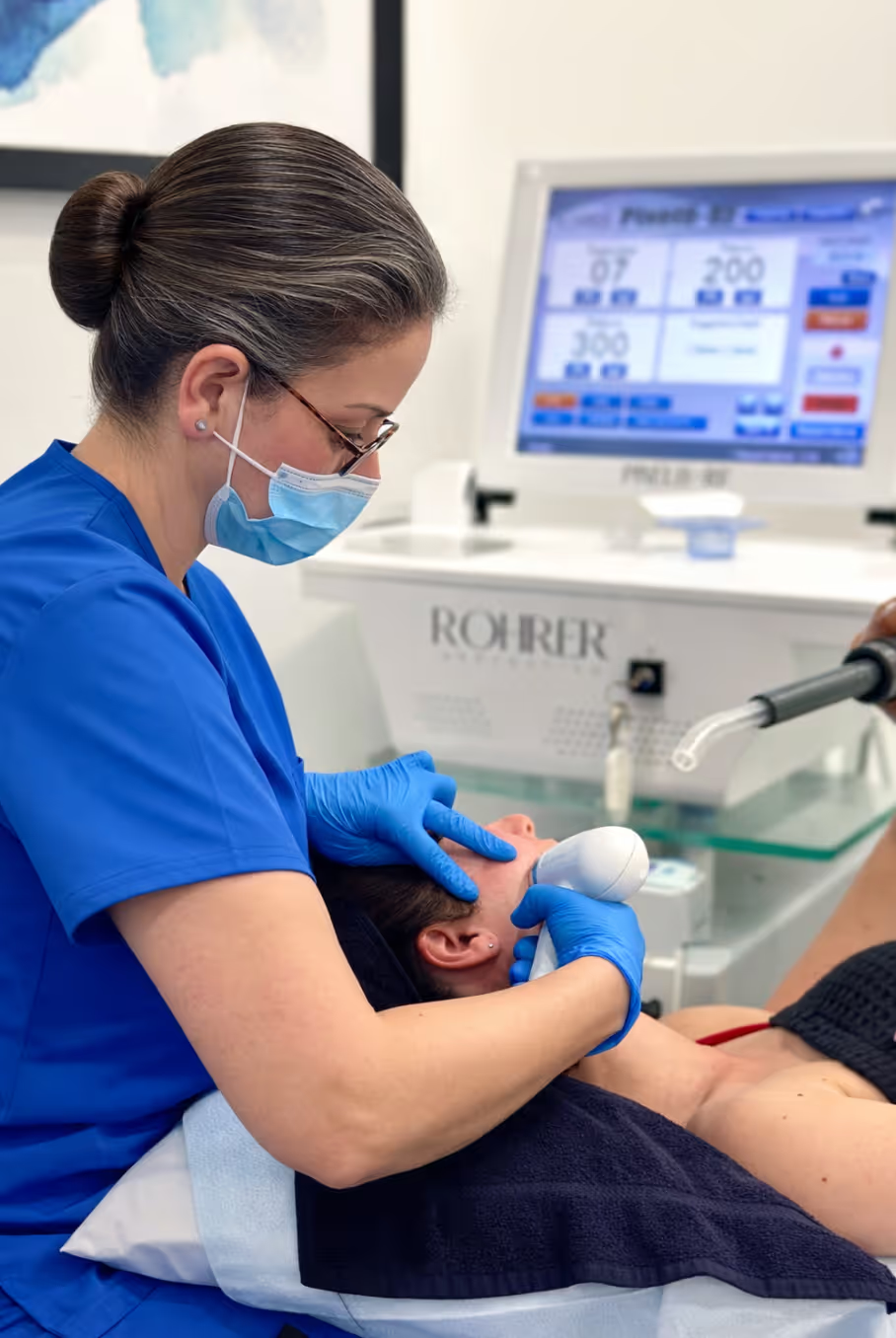
RF microneedling — radiofrequency delivered through fine insulated needles — stimulates deep collagen remodeling by delivering thermal energy to the dermis while protecting the epidermis. In the periocular area, it is used to address fine lines, skin laxity, and textural irregularity without the more significant downtime associated with plasma pen or ablative laser.
At Tysons Elite Esthetics, we use the Pixel8-RF system, a platform that allows precise control of needle depth and energy intensity — critical when working in the delicate skin of the lower eyelid and surrounding periocular tissue. Protocols for the eye area differ meaningfully from full-face treatments, requiring shallower depths and calibrated energy levels appropriate for thin skin.
RF microneedling in the periocular zone is typically performed as a series of three to four treatments spaced four to six weeks apart. Results build progressively, with most patients observing meaningful improvement in skin firmness, fine line reduction, and surface texture at the conclusion of the series. It is often combined with other periocular treatments — either in the same appointment or in a sequenced protocol — for a more comprehensive outcome.
We have explored the clinical mechanism of RF microneedling in greater detail in our blog on radiofrequency microneedling for skin laxity and in our broader guide comparing RF microneedling versus laser resurfacing.
Under-Eye Filler: Restoring Volume to the Tear Trough
Volume loss beneath the eye is among the most common drivers of perceived fatigue in professionals over forty. The tear trough — the groove running from the inner corner of the eye along the orbital rim — deepens as the fat pad diminishes and the overlying tissue loses support. No amount of topical eye cream addresses this structurally. Filler does.
Tear trough filler is placed using a thin, blunt-tipped cannula to deposit hyaluronic acid beneath the eye, restoring the smooth, full contour that reduces shadowing and creates a more rested, refreshed appearance. It is one of the most technically demanding filler placements on the face. The periocular area is vascular, the skin is thin, and the margin for error is narrow. Overcorrection creates puffiness. Placement that is too superficial creates a bluish discoloration known as the Tyndall effect. Incorrect technique in this zone carries genuine risk.
This is precisely why periocular filler at Tysons Elite Esthetics is performed under the medical oversight of our licensed clinical team. This anatomical expertise and surgical background inform every periocular injection protocol, ensuring that placement is both safe and anatomically precise.
We have covered the clinical decision-making around tear trough treatment in significant depth elsewhere. If you are still determining whether filler or another approach is right for your under-eye concern, our guides on tear trough filler, under-eye filler versus blepharoplasty, and under-eye bags versus hollow under-eyes each address a different dimension of this decision.
At Tysons Elite Esthetics, we work with a carefully curated selection of hyaluronic acid fillers — including Revanesse Versa and Revance RHA — chosen for their specific rheological properties, which affect how naturally and safely they integrate in delicate periocular tissue.
How These Treatments Work Together: Designing a Periocular Protocol
The most important principle in non-surgical eyelid rejuvenation is that no single treatment addresses every concern. A thoughtfully constructed protocol accounts for the full periocular anatomy — and sequences treatments appropriately.
A representative protocol for a patient presenting with mild upper lid hooding, lower lid crepiness, and moderate tear trough hollowing might proceed as follows:
Phase one — Volume restoration. Tear trough filler is placed first to restore the foundation of support beneath the lower eye. This allows the subsequent skin tightening treatments to work on tissue that is properly supported rather than collapsed.
Phase two — Skin tightening. RF microneedling sessions address the lower periocular skin texture and firmness over a series of monthly appointments. For upper lid hooding, plasma pen may be introduced as a standalone session once the lower eye work has settled.
Phase three — Neuromodulator refinement. A small amount of neuromodulator at the lateral brow tail can provide lift that opens the eye further. Crow's feet treatment simultaneously softens dynamic lines at the outer eye. We have covered crow's feet treatment in detail in our guide on Botox for crow's feet.
The sequencing matters. Combining plasma pen and filler in the same session, for example, is generally not appropriate — the inflammation from plasma pen affects how filler integrates. Understanding these interactions is part of what separates a well-designed protocol from a collection of isolated treatments.
Who Is a Good Candidate for Non-Surgical Eyelid Rejuvenation?
Non-surgical blepharoplasty is best suited to patients with mild to moderate periocular aging. More specifically, appropriate candidates typically present with one or more of the following:
- Early to moderate upper eyelid hooding where the lid platform is partially — but not fully — obscured
- Lower eyelid crepiness and fine surface lines without significant herniated fat
- Tear trough hollowing creating a tired, shadowed appearance
- Mild under-eye puffiness that has not yet reached the threshold requiring fat repositioning
- Brow descent contributing to a heavy upper eyelid appearance
Patients who are not appropriate candidates for non-surgical approaches include those with significant excess upper eyelid skin that obstructs vision, substantial herniated orbital fat requiring surgical repositioning, or structural ptosis — a true drooping of the eyelid resulting from muscle or nerve dysfunction. In these cases, surgical referral is the appropriate recommendation, and at Tysons Elite Esthetics, we will provide that honest guidance during consultation rather than offer a treatment that is not clinically appropriate.
What to Expect From a Consultation at Tysons Elite Esthetics
A periocular consultation at Tysons Elite Esthetics is not a sales conversation. It is a clinical assessment of your specific anatomy and concerns, conducted within a framework that prioritizes accuracy over volume.
Our founder, Luise Estelle, built this practice around the principle that every client deserves to understand exactly what can and cannot be achieved before committing to a treatment. For periocular cases specifically, the consultation involves a detailed assessment of skin quality, laxity, volume distribution, brow position, and orbital anatomy. This evaluation determines whether non-surgical approaches are appropriate, which specific treatments are indicated, and in what sequence they should be performed.
The clinical oversight applied to all treatment protocols means that periocular work at Tysons Elite Esthetics is held to a standard that most boutique aesthetic practices cannot match. This surgical background is particularly relevant in this context, where anatomical precision and an understanding of risk boundaries is non-negotiable.
For context on how combination approaches are structured across the full face, our guide on combination aesthetic treatments may be useful reading before your appointment.
Why Tysons Professionals Are Choosing This Approach in 2025
The shift away from surgical-first thinking in aesthetic medicine is not driven by marketing. It is driven by the genuine improvement in non-surgical tools, the growing recognition that most periocular aging in patients under sixty does not require surgery, and a cultural shift among high-achieving professionals who have neither the time nor the appetite for prolonged recovery.
For the professionals we serve in Tysons, McLean, Great Falls, and Vienna, the calculus is straightforward: a treatment protocol that delivers meaningful improvement, maintains a natural result that colleagues and counterparts cannot identify as "work," and does not require two to four weeks of visible healing has enormous practical value. The results are not identical to surgery — they are not intended to be. For mild to moderate periocular aging, they do not need to be.
We have also explored the broader trend of non-surgical alternatives in our guide on why more Tysons patients are skipping surgery, which may be useful context for patients still weighing their options.
Tysons Elite Esthetics is located at 7777 Leesburg Pike, Falls Church, VA 22043 — minutes from Tysons Galleria and easily accessible from McLean, Vienna, Great Falls, and Arlington. To schedule a periocular consultation, visit tysonseliteesthetics.com.
Start your transformation
Schedule your consultation with our knowledgeable and friendly team.