Sunscreen Isn't Protecting Tysons Skin the Way You Think

We hear a version of the same sentence in consultations at least once a week: "But I wear sunscreen every day." And we believe them. The problem isn't diligence — it's that the sunscreen most people are using was never going to do the job they think it's doing.
The difference between sunscreen vs no sunscreen aging outcomes is real and well-documented — daily SPF use measurably slows collagen breakdown, pigmentation, and fine line formation over time. But that research assumes correct application: a full teaspoon for the face, reapplied every two hours in direct exposure, using a formula with adequate UVA coverage. What we see in practice is a thin swipe applied once in the morning, often with an SPF that skews heavily toward UVB protection while leaving UVA — the wavelength most responsible for deep dermal aging — largely unaddressed. Your skin isn't burning, so it feels protected. Meanwhile, the damage that causes sagging, crepiness, and uneven tone is accumulating quietly beneath the surface. We covered this gap in more detail in Sun Protection Fails After 40 — Tysons Patients Should Know This, and it's one of the most common disconnects we address with clients in their 40s, 50s, and 60s.
For mature skin specifically, the calculus changes further. Skin that has already experienced years of collagen decline, hormonal shifts, or previous sun exposure needs a formula that protects without aggravating existing sensitivity, texture irregularities, or rosacea-prone areas. This is where sunscreen for mature skin becomes its own category — not simply "SPF 30 or higher," but a formulation with the right balance of physical and chemical filters, hydrating actives, and a texture that won't sit heavy in fine lines or emphasize dryness. If your current sunscreen feels chalky, pills under makeup, or leaves a tacky residue by midday, it's likely not being reapplied — and a product that isn't reapplied isn't providing continuous protection, regardless of its SPF number.
This is also where the best tinted sunscreen for mature skin earns its reputation as more than a cosmetic nicety. A well-formulated tinted SPF adds a physical layer of iron oxide protection against visible light and blue light — wavelengths that standard sunscreens often miss entirely, and which contribute meaningfully to pigmentation in patients already managing melasma or post-inflammatory discoloration. It also gives skin enough coverage that reapplication feels like touching up makeup rather than undoing it, which in our experience is the single biggest reason patients actually reapply consistently. We explored the mineral-versus-chemical decision at length in Sunscreen Ingredients That Actually Harm Sensitive Skin, and the tinted-versus-clear comparison in Tinted SPF vs. Clear Sunscreen: Which Protects Tysons Skin Better? — both worth reading if you're rethinking your daily routine.
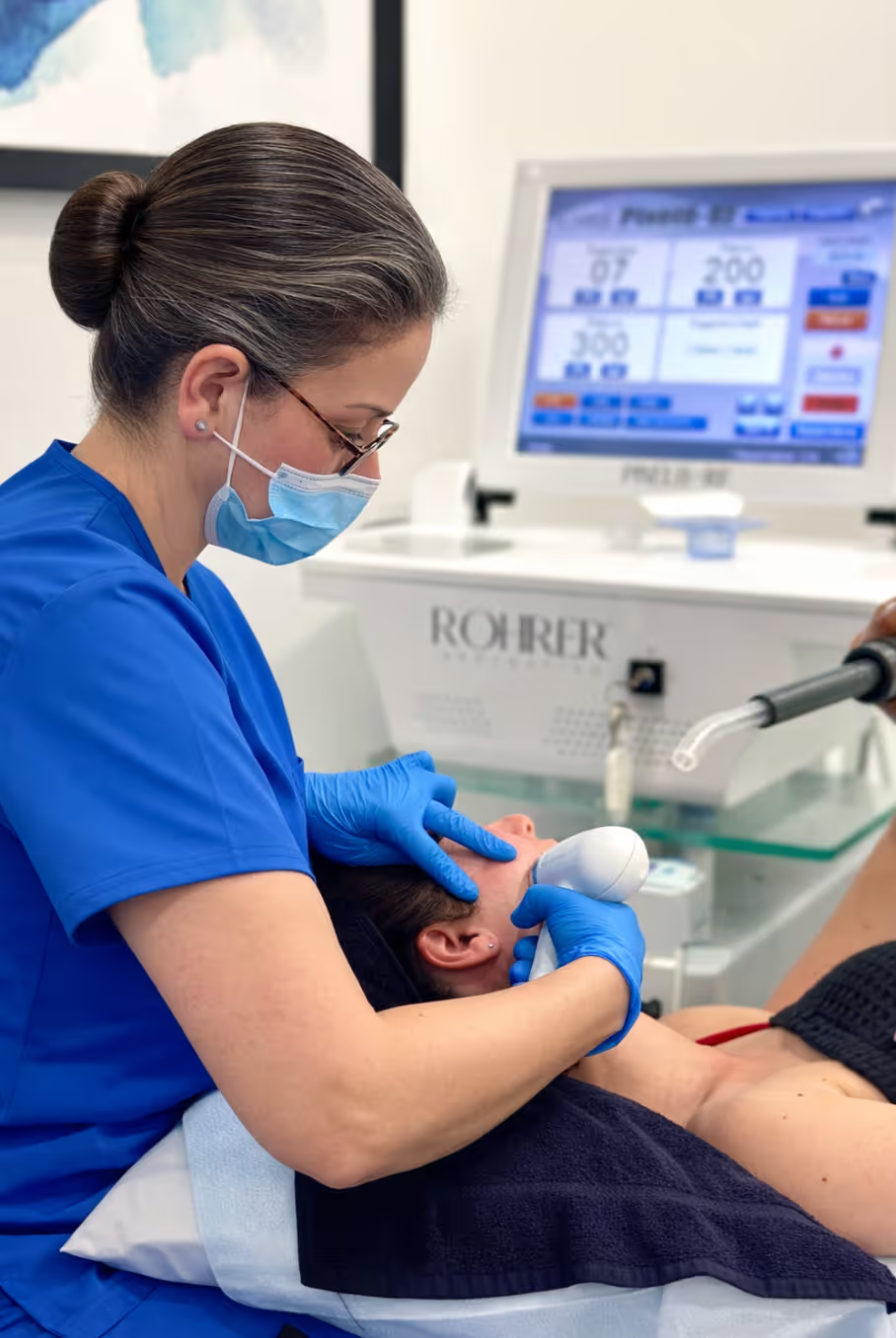
What we want every client to understand is that sunscreen is not a substitute for treating damage that's already occurred — it's a way to protect the investment you're making in your skin going forward. If you've had Pixel8-RF, exosome therapy, or Profhilo, inadequate sun protection can quietly undercut those results by allowing new UV damage to accumulate in the same tissue you just worked to rebuild. Sun damage tends to surface years after the exposure that caused it, a delay we discuss in Sun Damage Shows Up Years Later — Here Is Why, which is exactly why the daily habit matters more than any single treatment.
If you're not sure whether your current sunscreen is actually doing its job — or which formula makes sense for your skin type, tone, and treatment history — that's a conversation worth having at your next visit. We look at this the same way we look at everything else: not as a generic recommendation, but as one more detail in a long-term plan built specifically around your skin.
Start your transformation
Schedule your consultation with our knowledgeable and friendly team.