Chemical Peels Year-Round: Timing Treatments Around Your Social Calendar
The question we hear most often from clients who've had their first chemical peel isn't "Did it work?" — it's "When can I do this again?" That response makes sense. The results are real: clearer tone, smoother texture, a brightness that isn't something you can replicate at home. But the follow-up question matters, because the timing of chemical peels is one of the things that separates clients who see compounding, long-term improvement from those who get sporadic results they can't quite sustain.
If you're managing a demanding professional schedule in Northern Virginia — client dinners, board meetings, weekend events, a family wedding in six weeks — understanding how to work chemical peels into your life requires more than a generic answer. It requires knowing how different peels behave on different skin types, how much recovery to honestly expect, and how to build a treatment rhythm that serves your skin without requiring you to disappear for a week every time.
How Often Can You Get a Chemical Peel?
The honest answer: it depends entirely on the depth of the peel. This isn't a hedge — it's the most important variable in the conversation, and any provider who gives you a one-size answer without asking about your skin, your goals, and your schedule isn't being precise enough.
Superficial peels — including lighter formulations of glycolic, lactic, mandelic, and low-concentration salicylic acid — can typically be performed every three to four weeks. These peels work at the outermost layers of the skin, producing mild exfoliation, a day or two of dryness at most, and no significant peeling for most clients. For maintenance purposes, a monthly superficial peel is a reasonable and effective rhythm for most skin types. They're also the category of peel that translates well to a busy calendar — you can often return to work the same day or the next morning.
Medium-depth peels, which include formulations like the VI Peel Precision Plus, work deeper into the dermis and produce more meaningful results — including visible improvement in pigmentation, acne scarring, fine lines, and overall skin quality. These typically require four to six weeks between treatments, and you should expect three to seven days of visible skin shedding afterward. This isn't the kind of peel you schedule the week before a gala. It's the kind you schedule with intention, knowing that what comes after the shedding is worth the brief window of looking like you're mid-renovation.
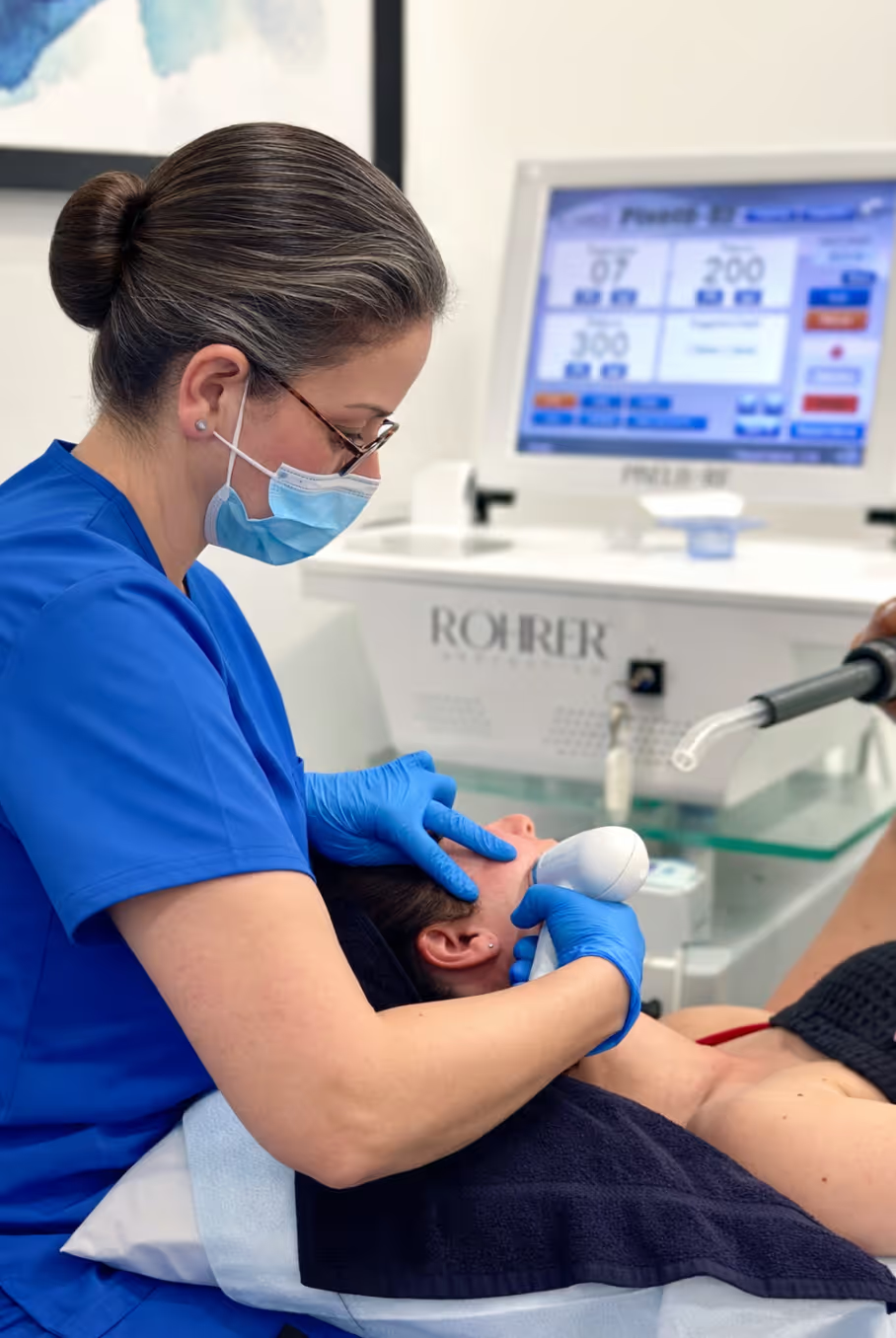
Deep peels are less common in routine maintenance schedules and require longer recovery windows. For most of the clients we see at Tysons Elite Esthetics, the better path to deep resurfacing involves a combination approach — pairing peels with treatments like Pixel8-RF radiofrequency microneedling or CoolPeel Fractional Laser Resurfacing — rather than repeatedly reaching for the most aggressive peel on the shelf. More on that shortly.
Building a Peel Schedule Around Your Calendar
One of the most useful frameworks we use with our clients is working backward from the events that matter. The goal is never to avoid treatments — it's to sequence them so recovery falls during low-visibility windows and your skin looks its best exactly when it needs to.
The four-week rule for medium peels: If you have a significant event — a wedding, a major conference, a milestone birthday dinner — schedule your medium-depth peel at least four weeks prior. This gives you enough time for the shedding phase to complete (days three through seven are typically the most visible), for the new skin to settle and stabilize, and for the full luminosity of the result to emerge. Clients who schedule a VI Peel Precision Plus four weeks before an event consistently arrive to that event looking rested, even-toned, and — in their own words — like themselves but better.
The day-before myth: No chemical peel of any meaningful depth should be scheduled within a week of a major event. Even a superficial peel can leave skin slightly pink, sensitized, or flaky for a day or two. When a client tells us they want to "freshen up" before something important happening in three days, we redirect that conversation toward treatments that produce immediate glow without any recovery requirement — including our Oxifusion Facial, which delivers real radiance with zero downtime and is genuinely appropriate as a pre-event treatment.
Seasonal timing: This is worth addressing directly, because the guidance has nuance. You can receive chemical peels in the summer — but you need to be honest about your sun exposure habits. Chemical peels temporarily increase photosensitivity, and unprotected sun exposure immediately after a peel is one of the fastest ways to trigger post-inflammatory hyperpigmentation, particularly in medium and darker skin tones. If your summers involve outdoor events, beach weekends, or long stretches outside, your summer peel schedule should lean lighter — superficial formulations with a strict SPF protocol. Fall and winter remain the most forgiving seasons for medium-depth peel series, when UV intensity is lower and sun avoidance is easier to maintain naturally. Our fall skin reset guide covers this transition in more detail.
When Peeling Alone Isn't Enough
Chemical peels are genuinely effective — but they're one tool. Clients who rely on peels alone for skin improvement often hit a plateau, particularly when the underlying concerns involve texture from acne scarring, deeper lines, or significant laxity. These are skin changes that peels can improve at the surface, but don't address in the dermis the way energy-based treatments do.
At Tysons Elite Esthetics, the clients who see the most consistent, compounding improvement are the ones working within a considered treatment plan — one where peels serve as a maintenance layer, and treatments like RF microneedling, exosome therapy, or collagen biostimulators address deeper structural change on a longer timeline. If you're curious about how peels fit within a broader approach to skin health, our post on microneedling vs. chemical peels walks through the comparison in practical terms.
It's also worth noting that for clients managing hyperpigmentation concerns — melasma, sun spots, or post-inflammatory discoloration — peel selection and timing become especially important. The wrong peel at the wrong time can worsen pigmentation rather than clear it. This is precisely the kind of nuance our team navigates carefully; the difference between a client who leaves frustrated and one who leaves with genuinely clearer skin is often in that initial assessment. Our guide to hyperpigmentation treatment in Tysons Corner is a useful reference if this is part of your concern.
What to Expect in Your First Peel Consultation at Tysons Elite Esthetics
Our team has spent a combined 70+ years in medical aesthetics, and a meaningful portion of that experience has been spent helping clients understand that not every peel is appropriate for every skin type — and that the most important conversation happens before the peel, not after. When you come in for a consultation, you won't be handed a menu and asked to choose. You'll have an actual conversation: about your skin history, your current routine, your sun exposure habits, your schedule over the next month, and what you're actually trying to improve.
From that conversation, we'll recommend the specific formulation and depth appropriate for your skin, build a realistic timeline around your life, and give you the honest recovery expectations — not the optimistic version, the accurate one. That's the kind of care that produces results you can trust and plan around.
If you've been curious about chemical peels but weren't sure how to fit them into a life that doesn't stop, that's exactly the conversation we're here to have. You can reach our Tysons, Virginia office to schedule a consultation, and our team will take it from there.
Start your transformation
Schedule your consultation with our knowledgeable and friendly team.