Beyond the Face: Treating Décolletage and Chest Skin in 2025

There is a particular kind of disconnect that happens in the mirror. The face looks refreshed — lifted, even. The neck has been addressed. And then the eye continues downward, past the collar, to an expanse of skin that tells a different story entirely.
The décolletage — the chest and upper breast area extending from the base of the neck to approximately the midsternum — is one of the most chronically undertreated zones in aesthetic medicine. It receives years of sun exposure, experiences repeated mechanical stress from sleep position, and lacks the sebaceous glands that give facial skin some degree of self-protective moisture. The result, for many patients in their 40s, 50s, and beyond, is a combination of crepiness, horizontal chest lines, sun damage, uneven pigmentation, and early laxity that no amount of product can meaningfully reverse.
At Tysons Elite Esthetics, our approach to the décolletage reflects the same clinical precision that guides everything we do. Under the medical oversight of our licensed clinical team, our Medical Estheticians extend the face-forward philosophy to the full canvas. This is not an afterthought. It is a treatment zone that deserves the same level of anatomical respect as the jawline or the periorbital area.
Why the Décolletage Ages the Way It Does
The skin of the chest is thinner than facial skin, with fewer oil glands and a more limited capacity for collagen repair. It spends decades exposed to UV radiation — often without the diligent SPF application reserved for the face — and it spends approximately a third of every day being compressed and creased by sleep position. Side sleepers, in particular, develop characteristic diagonal chest lines that become progressively more difficult to reverse over time.
Add to this the systemic collagen loss that accelerates after menopause, the cumulative effect of GLP-1 weight loss medications on skin laxity, and the reality that most skincare routines stop at the jaw, and the picture becomes clear: the décolletage is one of the most reliably neglected areas in both prevention and treatment.
The concerns that present most commonly include:
- Horizontal chest lines and sleep creases — Often among the first visible signs of décolletage aging, these lines deepen over decades and become visible even at rest.
- Crepey texture and skin laxity — Loss of structural integrity in the dermis creates the thin, papery quality that does not respond to topical hydration alone.
- Sun damage and pigmentation irregularity — Lentigines, diffuse brown patches, and blotchy tone resulting from years of cumulative UV exposure.
- Telangiectasias and redness — Small visible vessels and background redness are common in this area, particularly in fair-skinned patients.
- Loss of overall surface quality — A general dullness and roughness that contrasts with a well-maintained face.
The Treatment Hierarchy: Matching Modality to Concern
Treating the décolletage is not a matter of applying facial protocols to a different anatomical location. The chest requires thoughtful adaptation. The skin is thinner, more reactive, and heals more slowly than the face. The curve of the area and the proximity to the sternum create technical considerations that require clinical experience to navigate safely.
The most effective approach in 2025 is typically multimodal — layering treatments that address different tissue depths and different concerns in a sequenced protocol rather than attempting to accomplish everything in a single session.
CoolPeel Fractional Laser Resurfacing
For patients with meaningful sun damage, moderate laxity, and surface texture concerns, CoolPeel Fractional Laser Resurfacing remains one of the most powerful tools available. By creating controlled ablative injury across the dermis, CoolPeel fractional laser stimulates robust collagen remodeling and simultaneously resurfaces the outer layers of skin — addressing pigmentation, texture, and structural quality in a single treatment course.
The décolletage responds well to CoolPeel fractional laser, but the parameters must be carefully calibrated. Lower fluences and density settings are appropriate compared to facial protocols, and recovery is typically longer than on the face. This is a treatment that requires genuine clinical expertise and medical oversight — not a device to be used at an aggressive setting by an undertrained operator.
Our CoolPeel Fractional Laser Resurfacing service extends to the neck, décolletage, and hands, with protocols developed under our clinical team's surgical-level guidance. For patients who have been addressing facial sun damage and are ready to extend that work to the chest, this is often the most impactful single intervention available. Our blog post on CoolPeel Fractional Laser Resurfacing for sun damage provides additional clinical context for patients considering this option.
RF Microneedling for Structural Laxity
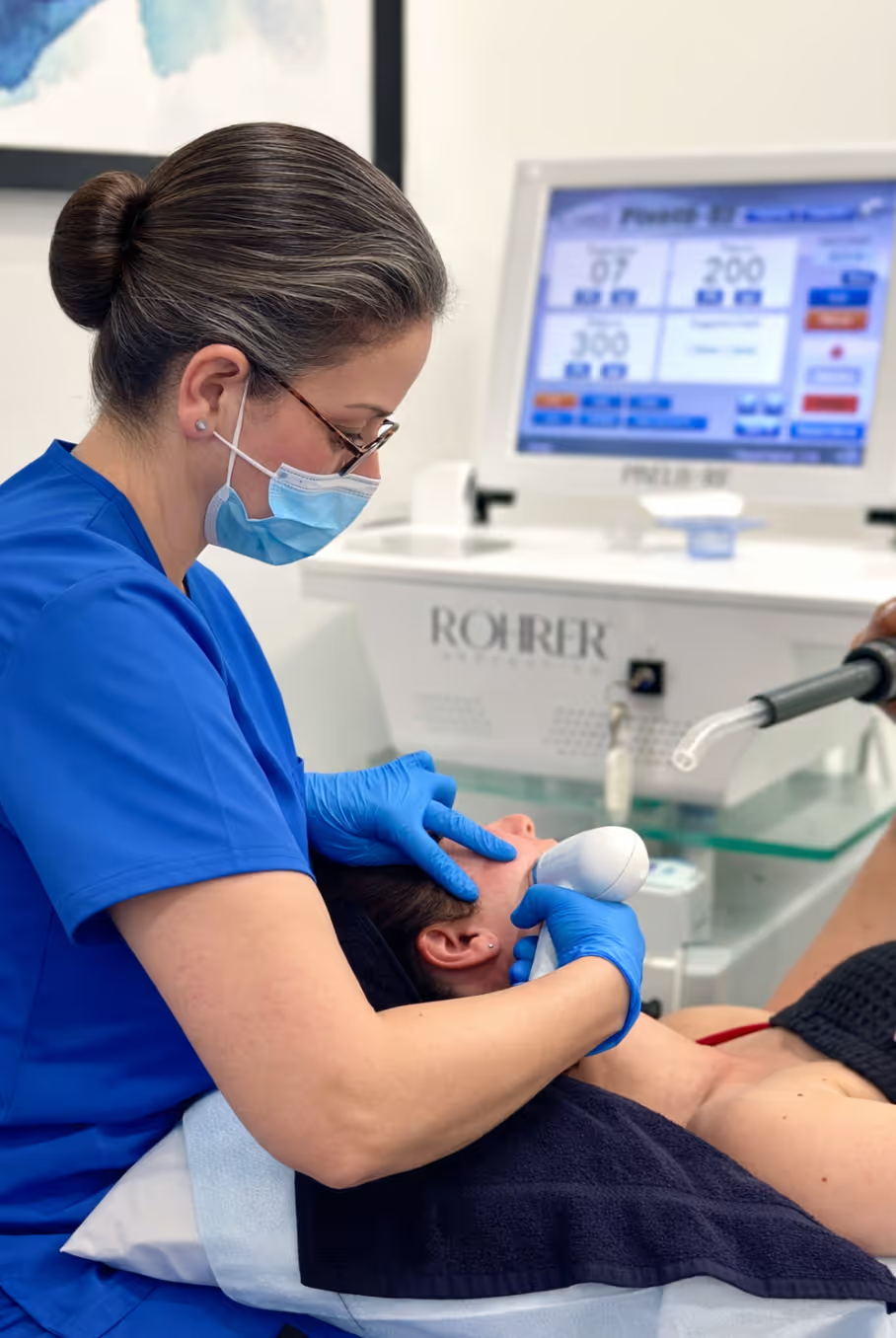
Radiofrequency microneedling has become the preferred approach for décolletage laxity in patients who want meaningful skin tightening with a more manageable recovery profile than ablative laser. By delivering RF energy through insulated microneedles at a precise dermal depth, the technology triggers thermal injury and collagen remodeling without the prolonged surface recovery associated with CoolPeel resurfacing.
For the décolletage specifically, RF microneedling addresses the crepey quality that develops as structural collagen diminishes — and it does so progressively, with results continuing to improve over three to six months as new collagen matures. A series of treatments is typically required to achieve the degree of improvement that patients in their 40s and 50s are seeking.
Our Pixel8-RF Radiofrequency Microneedling service is among the most requested treatments for patients approaching décolletage rejuvenation from a laxity-first perspective. For a deeper clinical understanding of what RF microneedling achieves and how to set realistic expectations, our post on radiofrequency microneedling for skin laxity is a useful starting point.
IPL Photofacial for Pigmentation and Vascular Concerns
When the primary complaint is pigmentation irregularity — brown spots, diffuse sun damage, or visible redness — Intense Pulsed Light offers a targeted, lower-downtime option that addresses chromophores in the superficial dermis without the recovery associated with ablative modalities.
IPL on the décolletage is highly effective for lentigines and flat pigmentation, and it delivers meaningful improvement in overall tone and clarity in a series of treatments. It is also the preferred modality for patients with early concerns who are not yet candidates for CoolPeel resurfacing, or for those who want to maintain results between more intensive interventions.
Our IPL Photofacial service addresses the décolletage as part of a comprehensive photo rejuvenation approach. Patients considering this option will find our post on hyperpigmentation treatment in Tysons Corner informative in understanding the distinction between different types of pigmentation and how each responds to treatment.
Chemical Peels for Surface Refinement
Medical-grade chemical peels play a supporting role in décolletage rejuvenation — not as a standalone intervention for advanced concerns, but as a complement to energy-based treatments and as a maintenance option for patients who want to sustain surface quality between more intensive sessions.
The Vi Peel Precision Plus, formulated with trichloroacetic acid and a synergistic blend of resurfacing agents, is among the most appropriate peel options for the chest. It addresses pigmentation, mild texture irregularity, and overall surface dullness with a predictable and manageable recovery profile. Our Vi Peel Precision Plus is frequently used as part of a longer décolletage treatment plan, particularly in the months following a CoolPeel or RF microneedling intervention.
Biostimulators for Volume and Structural Support
In patients who have experienced significant collagen loss — often accelerated by weight loss, hormonal changes, or the combined insult of sun damage and aging — biostimulator injections offer a complementary approach to energy-based tightening. Radiesse and Sculptra, when diluted and used off-label in the décolletage, can provide structural scaffolding and stimulate the body's own collagen production in a way that topical treatments and even energy devices cannot fully replicate.
This is a more advanced application requiring precise anatomical knowledge and careful patient selection. It is not appropriate for all patients, but for those with severe laxity who are not surgical candidates or who prefer to avoid surgery, it can meaningfully extend the results of their broader treatment plan. Our post on biostimulator treatments for skin laxity after 50 provides a useful framework for understanding when this approach is indicated.
The Sleep Crease Problem
Horizontal chest lines caused by sleep position occupy a clinical category of their own. Unlike wrinkles caused by muscle movement — which respond to neuromodulators — or laxity caused by collagen loss — which responds to energy devices — sleep creases are the result of repeated mechanical compression of the dermis over years and decades. They are, in a sense, permanent architectural deformations of the skin.
Small-molecule hyaluronic acid fillers, used in very superficial placement along the chest crease, can soften their appearance — but this requires a high level of technical skill and carries meaningful risk if performed without proper training. At Tysons Elite Esthetics, any filler application in this area is assessed individually and executed with the anatomical oversight that our clinical team's training brings to every injectable decision in our practice.
The more sustainable approach to sleep creases, for most patients, is a combination of surface resurfacing — either CoolPeel or RF microneedling — with modifications to sleep positioning and consistent application of retinoids and barrier-support actives to slow ongoing crease formation.
What Does Not Work
There are a number of approaches promoted in the consumer market that do not deliver meaningful results for décolletage aging. Silicone chest pads worn overnight can prevent further crease formation but do not reverse existing damage. Topical vitamin C and retinoids, while valuable in a maintenance protocol, cannot reverse moderate laxity or established sun damage on their own. Low-powered at-home LED devices lack the energy density to drive meaningful collagen remodeling in the dermis.
Patients who have tried these approaches and remain disappointed are the patients most likely to benefit from the clinical interventions available at Tysons Elite Esthetics. The décolletage is an area where the gap between consumer-grade and medical-grade is wide, and where the difference in outcome is correspondingly significant.
Treatment Sequencing and the Annual Plan
The most effective décolletage rejuvenation programs are not single events. They are annual plans that sequence treatments to maximize collagen stimulation, manage recovery appropriately, and layer results over time. A representative approach for a patient in their late 40s with sun damage, mild laxity, and surface texture concerns might look like this:
- Fall/Winter: CoolPeel Fractional Laser Resurfacing of the décolletage, taking advantage of lower UV exposure during the recovery and healing period. Three to four months of collagen remodeling follows.
- Spring: IPL photofacial to address any residual pigmentation irregularity and refine overall tone as the skin stabilizes.
- Summer: Diligent SPF protection as the primary intervention. No aggressive energy treatments during peak UV months.
- Early Fall: RF microneedling session to address ongoing laxity and sustain the structural improvements from the prior year's CoolPeel treatment.
This kind of sequenced approach — informed by where a patient is in their skin aging trajectory and what they have already done — is the foundation of how we work. It is why a consultation at Tysons Elite Esthetics is not a sales conversation. It is a clinical assessment.
For patients whose concerns extend to the neck as well as the décolletage, our post on neck and décolletage rejuvenation without surgery provides a comprehensive overview of how these adjacent zones are treated together. For those considering the full picture of skin tightening options, our comparison of RF microneedling versus laser resurfacing offers a useful clinical framework for decision-making.
A Note on Recovery Expectations
The décolletage heals more slowly than the face. Patients who undergo CoolPeel Fractional Laser Resurfacing of the chest should expect a longer healing arc — typically ten to fourteen days of active recovery, with continued redness and sensitivity extending for several weeks. RF microneedling carries a more modest recovery profile, with redness and mild swelling resolving within two to five days in most patients.
These timelines matter for treatment planning. Patients who have events, travel, or professional obligations that make extended downtime impractical should factor this into the scheduling conversation. Our Medical Estheticians will provide specific pre- and post-treatment guidance tailored to the individual, including appropriate skincare protocol adjustments and sun avoidance requirements during the healing period.
Why Tysons Elite Esthetics for Décolletage Treatment
The décolletage is not a forgiving treatment zone. The skin is thin, the area is visible, and the consequences of poorly calibrated energy delivery or imprecise technique are not easily hidden. Choosing a provider with genuine clinical depth — and genuine medical oversight — is not a luxury here. It is a baseline requirement.
At Tysons Elite Esthetics, every décolletage protocol is developed within a framework established by our licensed clinical team. Our Medical Estheticians hold the highest level of licensure available in the Commonwealth of Virginia, with training in laser protocols, resurfacing, and advanced skin science that goes well beyond standard esthetic certification.
The result is a practice environment where the décolletage receives the same considered, individualized attention as the face — not as an add-on, but as an integral part of a complete aesthetic program. For patients in Tysons Corner, McLean, Great Falls, Vienna, Falls Church, and the broader Northern Virginia corridor who are ready to address what the collar has been hiding, we are here.
Tysons Elite Esthetics is located at 7777 Leesburg Pike, Falls Church, VA 22043, near Tysons Galleria and the Greensboro Silver Line Metro station. To begin the conversation about your décolletage treatment plan, contact our team to schedule a private consultation.
Start your transformation
Schedule your consultation with our knowledgeable and friendly team.