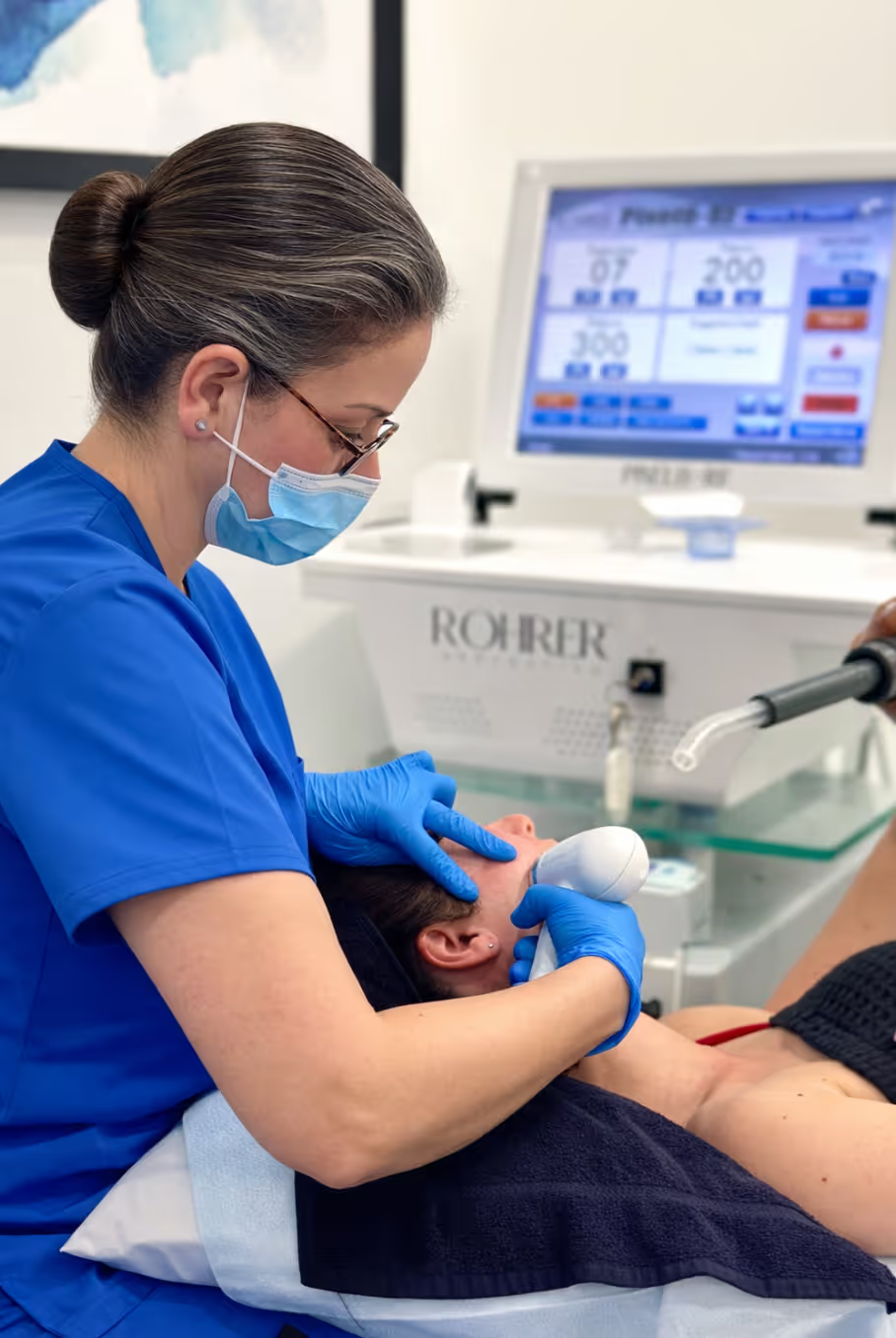
Fascia Tightening Treatments Tysons Patients Keep Overlooking

Most conversations about skin tightening start and end with the skin itself — collagen density, elasticity, sun damage. What rarely comes up, even among patients who've tried several treatments, is fascia: the thin, fibrous connective tissue that wraps around muscles, holds everything in place, and quietly loses pliability as we age. When fascia tightens, thickens, or adheres unevenly, it can pull on the skin above it in ways no topical product or standard facial will ever correct. This is the piece of the puzzle we find ourselves explaining to clients again and again, especially those who've already invested in good skincare and are frustrated that it isn't translating to the lift they expected.
Fascia work isn't new to physical therapy or sports medicine, but its role in aesthetic skin tightening is still something most med spas don't discuss — partly because it requires a more hands-on, technically trained approach than simply running a device over the surface. At Tysons Elite Esthetics, our team's combined 70+ years in medical aesthetics means we were trained to look past the skin to the structures beneath it. A fascia tool, used correctly, releases restrictions in that connective layer so that energy-based treatments like radiofrequency microneedling can do their job more effectively — rebuilding collagen in tissue that's actually able to respond, rather than tissue that's being held taut by fascia that hasn't moved in years.
Why This Matters If You've Already Tried Standard Skin Tightening
If you've searched for non surgical skin tightening near me and tried a round of treatments that delivered modest or short-lived results, fascia may be part of the explanation. We see this often in clients who've had Morpheus8 or traditional microneedling after 50 with results that faded faster than expected, or who've compared PDO threads against Ultherapy without addressing the underlying tension pattern first. Fascia-informed treatment protocols don't replace these technologies — they prepare the tissue so the technology performs the way it was designed to.
Non Surgical Skin Tightening for Arms: Where Fascia Work Often Gets Skipped
The arms are one of the areas where this oversight shows up most. Clients pursuing non surgical skin tightening arms treatments often assume loose skin along the upper arm is purely a volume or elasticity issue, when fascia restriction across the triceps and underarm area can be contributing to how the skin drapes. We've found that incorporating manual fascia release ahead of RF microneedling for arm skin tightening allows the energy to reach tissue that's genuinely ready to remodel, rather than tissue still being pulled taut by restricted fascia above it. It's a small sequencing change that can meaningfully affect how smooth and even the final result looks.
How We Approach It
Every fascia assessment at our practice starts with hands-on evaluation — not a device, not a protocol pulled off a shelf. Our team identifies where tension patterns exist, works to release them using targeted manual technique and, where appropriate, rare European devices not widely available in U.S. practices, and only then layers in energy-based treatments like Pixel8-RF radiofrequency microneedling or discusses whether microcurrent or RF makes more sense for your tissue type. This sequencing matters more than most patients realize, and it's part of why clients who've felt plateaued elsewhere often see renewed movement here.
If you've been chasing tighter, smoother skin and feel like something isn't adding up despite doing everything "right," we'd like to actually look at what's happening beneath the surface with you. Book a consultation, and let's find out whether fascia has been the missing piece.
Start your transformation
Schedule your consultation with our knowledgeable and friendly team.