Late Summer Pigmentation Spikes: What Tysons Patients Miss

Most people who are serious about their skin do everything right in June. They load up on SPF, avoid peak UV hours, wear a hat at the beach. And then, somewhere around mid-August, they notice something unexpected: new spots. Darker patches. A general dullness that wasn't there in June. What went wrong?
The answer isn't negligence — it's biology. Melanocytes, the pigment-producing cells in your skin, don't respond to UV exposure in real time. The damage accumulates quietly across weeks of cumulative sun exposure, and the spots you're seeing in late July or August are often the result of sun your skin absorbed in May and June. The trigger has already fired. What you're witnessing now is the skin catching up. For clients in Tysons, McLean, and the greater Fairfax County area, this matters because Northern Virginia summers are long, humid, and relentlessly bright — and outdoor exposure through car windows, weekend activities, and even office buildings with significant glass exposure adds up faster than most people account for.
This delayed pigmentation response is also why waiting until fall to address sunspots often means allowing additional UV exposure to compound the problem. The spots you treat in September may be fighting against ongoing melanocyte stimulation if you're still spending time outdoors without adequate protection. Understanding this cycle changes how and when treatment decisions should be made. It also explains why clients who address pigmentation concerns with our team earlier in the season — before the summer accumulation peaks — tend to see more sustained, even clearance compared to those who treat reactively once the damage is already visible.
As for what actually works: not all pigmentation responds the same way to the same technology, which is one of the most consequential mistakes we see with patients who come to us after suboptimal treatment elsewhere. A flat, well-defined sunspot on the cheek is a different clinical entity than diffuse post-inflammatory hyperpigmentation or the layered, hormonally driven discoloration of melasma. Treating them identically — or treating without a proper diagnosis — can make certain conditions significantly worse. If you're unsure what you're dealing with, our detailed guide on melasma vs. sun spots vs. post-inflammatory hyperpigmentation walks through how these three conditions differ and why getting the diagnosis right before choosing a treatment is the non-negotiable starting point.
For true solar lentigines — the flat, sharply demarcated brown spots produced by cumulative UV exposure — IPL photofacial remains one of the most effective and well-documented treatment options available. Intense Pulsed Light targets the melanin concentration within the spot, causing it to absorb the light energy and rise to the skin's surface before flaking away over the following week or two. The results, when the device is calibrated correctly for your skin tone and the spots are properly identified, are often dramatic after just one to two sessions. That said, timing matters. IPL photofacials require that active sun exposure be minimized both before and after treatment — ideally a two to four week window of sun avoidance. Treating too close to ongoing outdoor exposure risks triggering a rebound pigmentation response, particularly in patients with olive or deeper skin tones who carry a higher baseline risk of post-inflammatory hyperpigmentation.
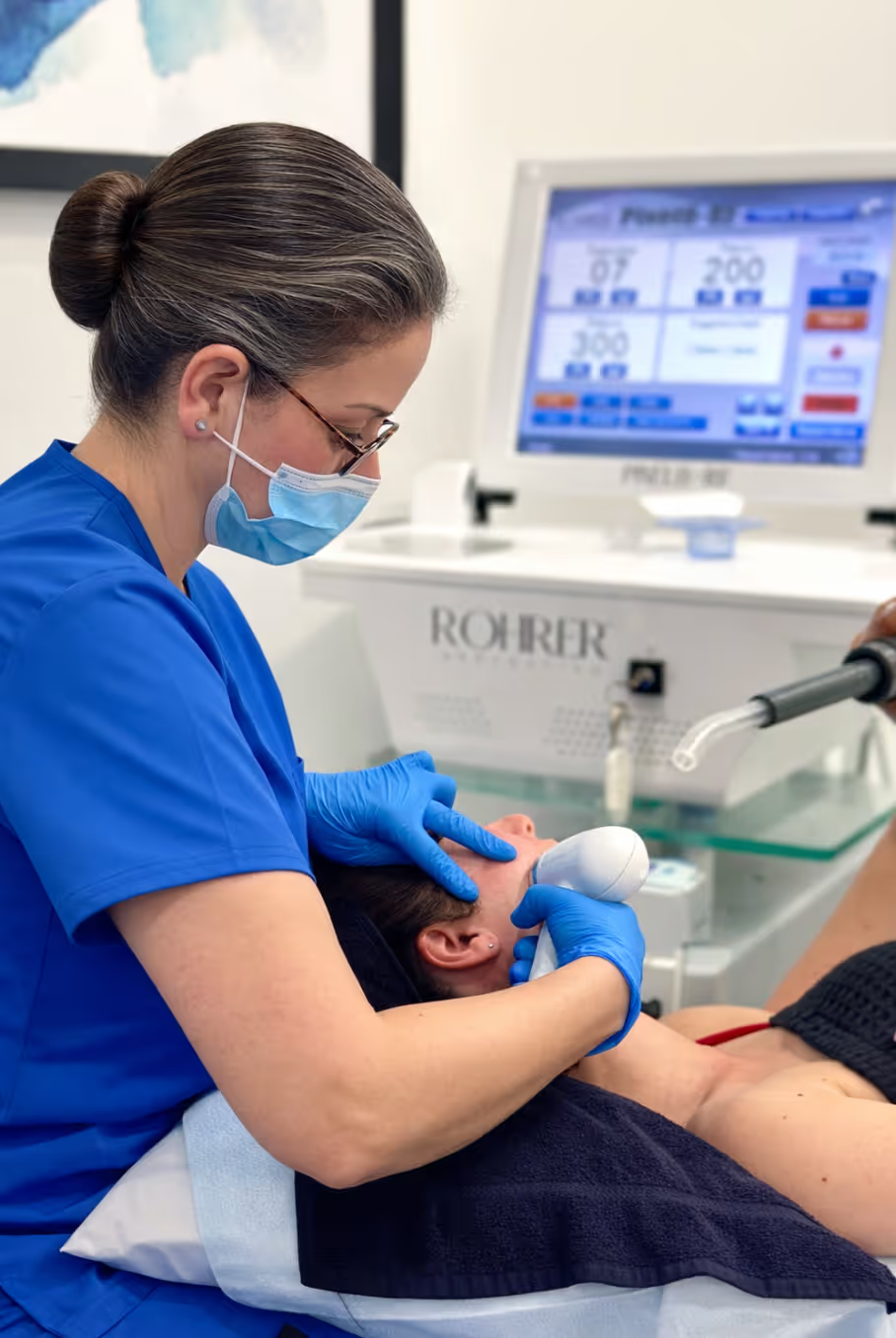
For clients with more complex pigmentation patterns, layered sun damage affecting texture and tone simultaneously, or those seeking more comprehensive skin resurfacing, CoolPeel Fractional Laser Resurfacing addresses not just surface pigmentation but the full depth of photodamage — improving tone, texture, fine lines, and overall skin quality in a single treatment course. The tradeoff is a more involved recovery, and timing is again essential: CoolPeel resurfacing is generally best performed when the risk of post-treatment sun exposure can be well managed, making late September through early October an ideal window for many Tysons patients. This is one of the reasons our team often begins planning fall treatment schedules in August — so that when the best treatment window arrives, clients aren't waiting on a waitlist.
It's also worth understanding the relationship between late summer hyperpigmentation and your broader skin health. Pigmentation that appears or worsens in late summer rarely exists in isolation. The same cumulative UV exposure that drives melanocyte activity also accelerates collagen degradation, disrupts the skin barrier, and contributes to the kind of low-grade chronic inflammation that makes skin look dull and aged even when it's technically "healthy." Our piece on why sun damage shows up years later explores this longer arc in more detail — particularly relevant for clients in their 40s and 50s who are now seeing the consequences of decades of accumulated exposure, not just this summer's.
For clients managing skin sensitivity alongside pigmentation concerns — a combination more common than most people realize — the treatment approach requires an additional layer of care. Aggressive pigment-targeting treatments on sensitized skin can cause more harm than good. Our team has extensive experience layering protocols that address pigmentation without triggering reactivity, including options specifically designed for hypersensitive skin after summer that still deliver meaningful results rather than simply soothing the skin without addressing the underlying concern.
One pattern worth naming directly: many Tysons patients who search for laser sun spot removal near them find a long list of providers offering identical-sounding treatments, often at competitive price points. What they don't find is a meaningful conversation about which laser, at which setting, calibrated for which skin type, timed to which point in their sun exposure cycle, will actually produce a lasting outcome without adverse effects. These decisions require clinical judgment built from real experience — not a dropdown menu on a booking app. Our team brings a combined 70-plus years in medical aesthetics to every treatment consultation, and we've seen enough variable outcomes from poorly matched treatments to know that the device is only part of the equation. The clinician operating it, and the diagnostic conversation that precedes it, matter just as much.
If you've noticed new spots appearing in recent weeks, or if pigmentation that seemed manageable in spring has become more pronounced through the summer, this is the right time to have a real conversation about it — not to wait for October and hope it fades. It won't. But it will respond well to the right treatment, timed correctly, delivered by a team that understands what they're looking at.
To schedule a pigmentation consultation at Tysons Elite Esthetics, contact our team directly. We serve clients throughout Tysons, McLean, Vienna, Falls Church, and the broader Northern Virginia area.
Start your transformation
Schedule your consultation with our knowledgeable and friendly team.