Glycolic Acid Peels at Home Are Hurting Tysons Skin

There is a particular kind of confidence that comes with a well-curated skincare routine. You have the serum, the SPF, the exfoliating toner — and now you have added a glycolic acid peel from your favorite online retailer. It arrives in elegant packaging with a reassuring percentage printed on the front, and you use it twice a week the way the instructions suggest. Your skin looks brighter for a day or two. And then, quietly, things start going sideways.
It usually begins with tightness. Then a faint but persistent redness that does not quite go away. Some clients come in with barrier disruption so significant that their moisturizer stings on application. Others have developed post-inflammatory hyperpigmentation — dark patches that appeared after what they assumed was a normal reaction. We see this pattern regularly at Tysons Elite Esthetics, and it almost always traces back to the same source: glycolic acid being applied at home without a proper skin assessment, without knowledge of contraindications, and without any understanding of how to adjust the protocol based on how the skin is actually responding.
This is not a criticism of glycolic acid itself. It remains one of the most well-researched alpha hydroxy acids in medical aesthetics, with genuine evidence behind its ability to accelerate cell turnover, improve skin texture, and support collagen synthesis over time. The issue is application — specifically, the significant difference between what a consumer-grade product can do and what a properly formulated clinical peel can do, and the equally significant difference between applying a peel yourself and having it applied by someone with the training to read your skin in real time.
Consumer-grade glycolic products sold in the United States are typically formulated at concentrations between 5% and 10%, occasionally reaching 15% in products marketed as "professional strength." Clinical peels used in a supervised setting commonly work at concentrations between 20% and 70%, with pH levels calibrated precisely to control depth of penetration. The percentage on a bottle tells only part of the story — pH matters as much as concentration, and most at-home products deliberately raise the pH to slow acid activity and reduce the risk of adverse events in untrained hands. The result is a product that is unlikely to cause serious harm but is also unlikely to produce meaningful change beyond very superficial exfoliation.
The deeper problem is not that at-home peels are too weak. It is that people use them incorrectly, and the consequences compound over time. Using glycolic acid too frequently breaks down the skin barrier — the outer layer responsible for retaining moisture and protecting against environmental stressors. A compromised barrier is more reactive, more prone to sensitivity, and slower to recover from any subsequent treatment. Clients who come in for a Vi Peel Precision Plus or a more advanced resurfacing protocol often require an extended preparation period simply because the barrier has been eroded by months of overzealous at-home exfoliation. That preparation time represents real delays in the results they are trying to achieve.
There is also the question of who should not be using glycolic acid at all — or who should use it only under guidance. Active rosacea, certain forms of hyperpigmentation (particularly melasma), reactive or sensitized skin, and skin that is simultaneously using prescription retinoids are all situations that require careful management. Applying a glycolic peel over compromised or contraindicated skin does not always cause a dramatic reaction. Sometimes it causes a slow, subtle degradation that is easy to dismiss until the cumulative damage becomes visible. If you have noticed increased flushing or redness that seems to have crept up without a clear cause, it is worth reading about how to distinguish rosacea from general flushing before continuing any acid-based routine at home.
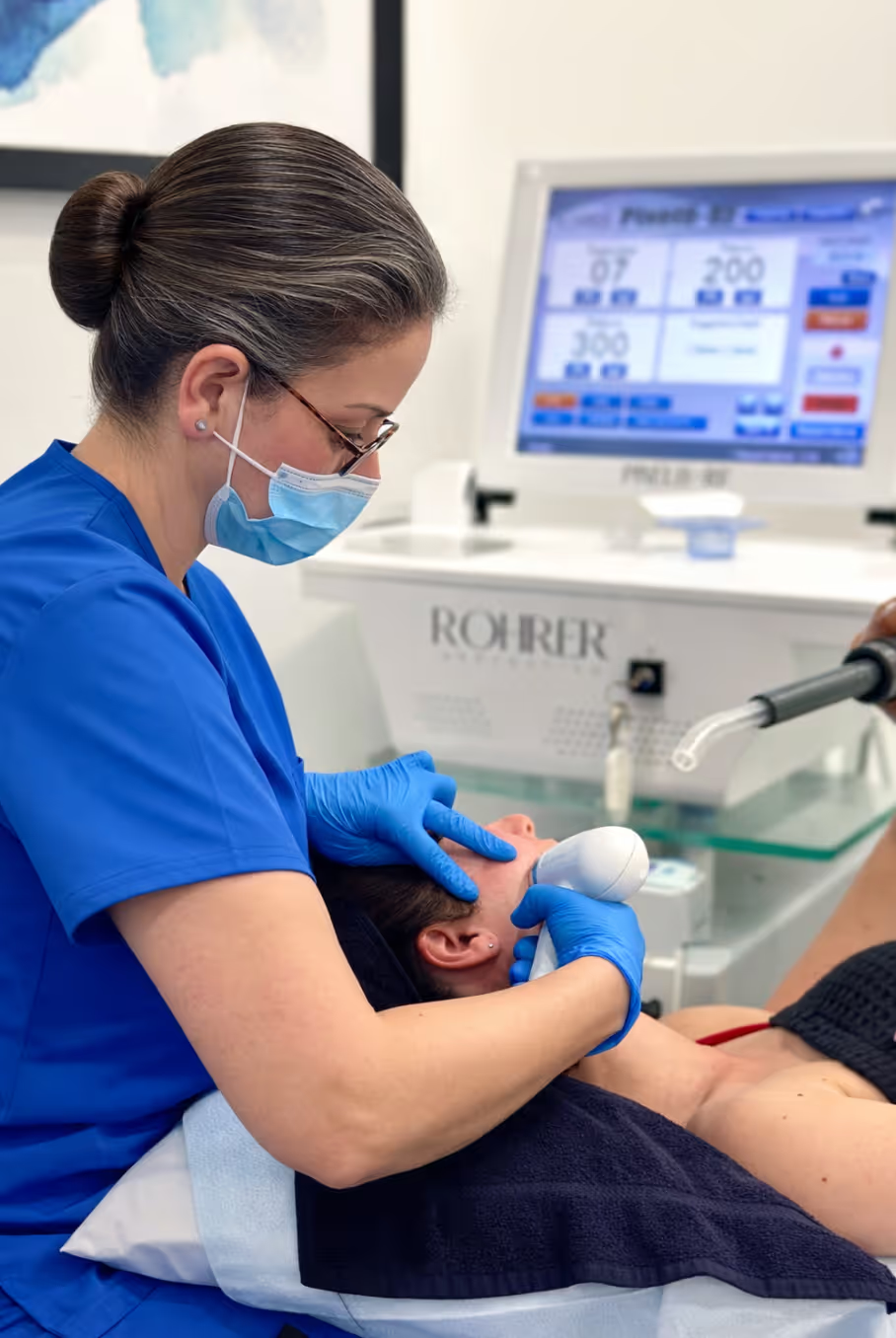
Professionally supervised chemical peels operate on an entirely different level — not because the chemistry is magic, but because the application is precise and the protocol is personalized. Before any peel is performed at Tysons Elite Esthetics, we assess skin type, tone, recent treatment history, current topical use, and specific concerns. We look at the skin under magnification. We ask about lifestyle factors like sun exposure, stress, and hydration. The peel is then selected — and there are meaningful differences between a glycolic peel, a salicylic peel, a TCA peel, and a blended formula like the Vi Peel — based on what your skin actually needs, not what seemed appealing at checkout.
For clients with melasma or uneven pigmentation, the choice of peel matters enormously. A glycolic peel applied incorrectly to active melasma can worsen it. A properly timed and selected clinical peel, on the other hand, can begin to lift pigmentation in a controlled way without triggering rebound darkening. The same principle applies to acne-prone skin, where salicylic-based formulations often outperform glycolic, and to skin with significant sun damage, where a deeper resurfacing approach may be more appropriate than a superficial acid treatment. You can read more about how sequencing these decisions alongside other treatments affects outcomes in our piece on microneedling or chemical peel first.
Timing is another factor that at-home protocols simply cannot account for adequately. In Northern Virginia, late summer and early fall bring specific skin challenges — accumulated UV exposure, humidity-related barrier stress, and the kind of pigmentation spikes that Tysons patients often don't connect to their peeling routine. Applying a glycolic peel in peak summer, with unprotected or inadequately protected skin, is one of the more reliable ways to cause post-inflammatory hyperpigmentation. The skin's response to acid treatment is meaningfully different depending on recent sun exposure, and a professional who knows the seasonal rhythms of treatment will guide you accordingly. We cover this broader timing question in detail in our guide on timing chemical peels around your social calendar.
None of this means that glycolic acid has no place in your routine. A well-formulated glycolic toner used appropriately, on the right skin type, without over-frequency, can be a reasonable maintenance tool between professional treatments. But it is a maintenance tool — not a replacement for the clinical depth of a supervised peel, and not a substitute for the kind of full-picture assessment that determines whether an acid-based approach is even the right direction for your skin right now.
If you have been using at-home glycolic products and are noticing increased sensitivity, persistent redness, uneven texture, or pigmentation that was not there before, those are signals worth investigating properly. A consultation gives us the opportunity to look at what is actually happening with your skin — not just the surface — and to build a plan that addresses the concern correctly rather than compounding it. The team at Tysons Elite Esthetics brings more than 70 combined years of medical aesthetics experience to exactly these kinds of questions, and we would rather help you course-correct early than watch avoidable damage deepen over time.
When you are ready to move beyond what a bottle can do, we are here. You can also explore whether your overall skincare approach is still serving you in our piece on when skincare stops working and professional treatments become the right next step.
Start your transformation
Schedule your consultation with our knowledgeable and friendly team.