Ozempic Skin Changes: Which Treatments Actually Restore Lost Collagen

If you have been on a GLP-1 medication like Ozempic or Wegovy for any length of time, you already know the weight loss results can be remarkable. What you may not have anticipated is what happens to your skin in the process. The rapid fat loss that makes these medications so effective is the same mechanism that leaves many patients in Tysons, McLean, and Fairfax County dealing with something their scale will never show: accelerated collagen loss, skin laxity, and a texture that looks significantly older than it did before treatment began.
This is not a cosmetic complaint to dismiss. The fat beneath your skin is not just storage — it is structural scaffolding. When it diminishes faster than your skin can adapt, collagen fibers that once had support beneath them begin to collapse. The result is often described as deflation rather than aging: skin that looks hollowed, crepey, or loose in areas that were previously full. The face tends to show it first — hollowed cheeks, deepened nasolabial folds, a quality around the jawline and under the chin that can add years overnight. But the neck, arms, abdomen, and inner thighs are frequently involved as well. Searching for where to get GLP-1 near me is only half the conversation. The other half is understanding what your skin will need once the medication starts working.
Why Standard Moisturizers and Supplements Fall Short
Collagen powder and topical peptides are not going to rebuild what GLP-1-related fat loss removes. The skin changes associated with rapid weight loss involve structural collagen in the deep dermis and subcutaneous layer — territory that no over-the-counter product reaches. What is needed instead are treatments that either stimulate new collagen production from within the tissue itself or physically deliver structure back to the areas that have lost it. The good news is that Tysons Elite Esthetics offers both categories, and for most patients on GLP-1 medications, a combination approach produces results that neither strategy achieves alone.
The first thing to understand is that not every skin change from GLP-1 medications is the same problem. Some patients experience primarily volume loss — that hollowed, deflated quality that makes filler seem like an obvious answer. Others experience predominantly skin laxity — the skin itself has lost elasticity and now sits loosely over structures that have shrunk. Many experience both simultaneously, which is why an honest assessment from a clinician with real experience matters more than any single treatment recommendation. Our team has been working together for years and brings 70+ years of combined experience in medical aesthetics to every consultation — experience that shows in the specificity of treatment plans, not the generality of them.
Biostimulators: The Collagen Rebuilding Category That Matters Most
For patients experiencing GLP-1-related collagen loss, biostimulators are frequently the most important category of treatment to understand. Unlike hyaluronic acid fillers, which replace lost volume temporarily, biostimulators work by triggering your own tissue to produce new collagen over time. The results are gradual, natural-looking, and significantly more durable — which matters for patients who may continue on GLP-1 medications for years.
Sculptra and Radiesse are the most established options in this category. Sculptra, a poly-L-lactic acid injectable, stimulates collagen synthesis progressively over three to six months and is particularly well-suited to the global facial volume loss and skin thinning that many GLP-1 patients experience. Radiesse, a calcium hydroxylapatite biostimulator, provides immediate structural support while also triggering collagen production — making it a strong choice for areas like the jawline, lower face, and hands where both volume and tissue quality have degraded. If you have been looking for biostimulators near me in the Northern Virginia area, it is worth knowing that the selection, dosing, and placement of these products varies enormously by provider. The clinical judgment that goes into a biostimulator treatment plan is what separates a natural-looking result from one that reads as treated.
Polynucleotides represent a newer and increasingly important option in the biostimulator conversation. These injections work at the cellular level to repair and regenerate skin tissue — particularly valuable for improving the crepey texture that often develops alongside GLP-1-related fat loss. Our existing coverage of Polynucleotides or Sculptra — Which Builds Better Skin After 45 explores the differences in depth, and many patients find that the combination of both addresses a wider range of changes than either treatment alone. You can also explore polynucleotide injections for skin rejuvenation in more detail if this is new territory for you.
Radiofrequency Microneedling for Skin Laxity After GLP-1
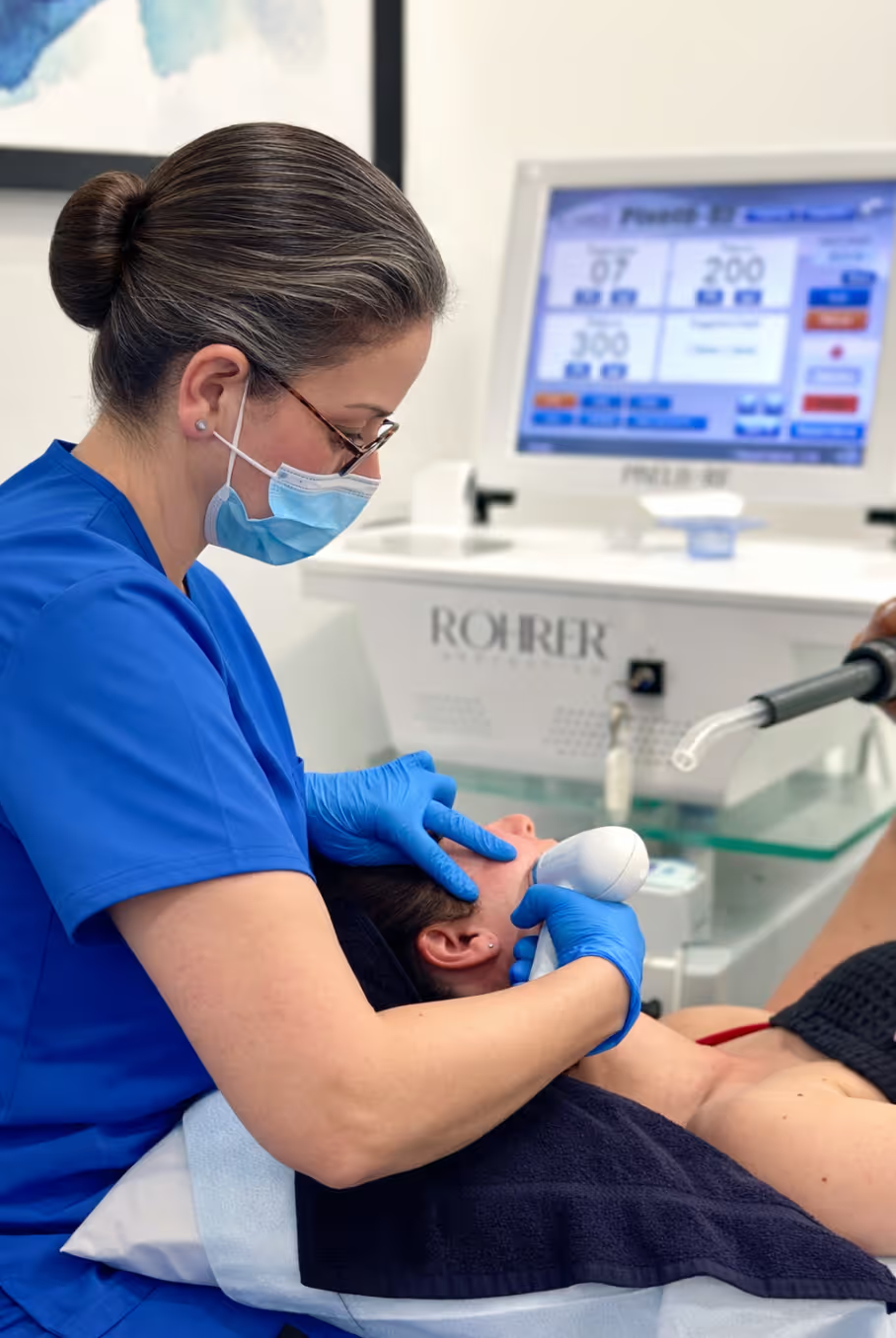
When the primary concern is not volume loss but skin laxity — that loose, sagging quality that develops when fat disappears faster than skin can retract — energy-based devices become essential. Radiofrequency microneedling, specifically the Pixel8-RF platform available at Tysons Elite Esthetics, delivers controlled thermal energy into the deep dermis to trigger collagen remodeling and skin contraction. For patients with moderate laxity in the face, neck, jawline, and body, this treatment addresses the structural problem directly — not by filling the space, but by tightening the tissue itself.
The mechanism is worth understanding: radiofrequency energy creates micro-injuries in precise zones of the dermis, stimulating a healing response that produces new collagen and elastin. Over a series of treatments — typically three to four sessions spaced four to six weeks apart — most patients see measurable improvement in skin firmness, texture, and overall tightness. For GLP-1 patients dealing with arm, abdominal, or thigh laxity, this approach can be applied to body areas as well as the face. Results are cumulative and continue improving for months after the final session.
Combining radiofrequency microneedling with biostimulator injections is one of the most effective protocols we use for GLP-1-related skin changes. The energy device improves skin quality and tightening from the outside in; the biostimulator rebuilds collagen architecture from within. The pairing addresses the problem on two levels simultaneously, and the results tend to be significantly more comprehensive than either treatment alone. For a deeper look at how combination approaches work for full-face rejuvenation, the coverage of combination skin tightening treatments is worth reading before your consultation.
The Role of Exosomes in GLP-1 Skin Recovery
Tysons Elite Esthetics is the only med spa in Northern Virginia authorized to use Human Progenitor-Derived Exosomes — and for patients recovering from significant GLP-1-related skin changes, this distinction matters more than it might first appear. Exosomes are signaling molecules derived from stem cells that communicate with skin tissue at a cellular level, accelerating repair, reducing inflammation, and promoting collagen synthesis in ways that conventional treatments cannot replicate.
Applied in combination with radiofrequency microneedling or used as a standalone regenerative treatment, exosomes can meaningfully accelerate the skin recovery process that GLP-1 weight loss disrupts. Patients who have experienced rapid fat loss often find that their skin's natural regenerative capacity has been outpaced by the speed of the change. Exosome therapy helps restore that capacity. You can learn more about exosome therapy for skin rejuvenation and the difference between microneedling with PRP versus microneedling with exosomes to understand which approach aligns with your specific concerns.
When Volume Replacement Is Still Part of the Answer
Biostimulators and energy devices address collagen and laxity — but some GLP-1 patients also experience facial hollowing that requires more immediate structural restoration. In these cases, carefully placed hyaluronic acid fillers in the midface, temples, or under-eye area may be part of a comprehensive plan, used not as a first-line treatment but as a complement to the collagen-rebuilding work happening beneath the surface.
The important distinction here is sequence and intention. Filling volume that has been lost to GLP-1 medications without first addressing skin quality and laxity can produce results that look disproportionate or unnatural. The better approach — and the one our team consistently recommends — is to prioritize tissue quality first, then assess residual volume needs once the skin itself is responding. This is the kind of judgment that requires clinical experience with actual GLP-1 patients, not just familiarity with the injectable products involved.
The existing piece on Ozempic Face: How to Address Volume Loss and Skin Changes From GLP-1 Weight Loss covers the volume replacement piece in detail, and the coverage of why patients are pairing GLP-1 drugs with biostimulators explains the clinical rationale for the combination approach that is now standard among patients on these medications.
Building a Treatment Timeline That Works With Your GLP-1 Protocol
One of the most common questions we hear from patients currently on Ozempic or Wegovy is when to start addressing skin changes — and whether it makes sense to wait until they have reached their goal weight before beginning treatment. The honest answer is that waiting is rarely the right strategy. The collagen loss that accompanies rapid fat loss is cumulative and progressive. Beginning biostimulator treatments and skin tightening protocols early — ideally while weight loss is still ongoing — allows the skin to adapt more gradually and often produces better final results than trying to address years of accumulated laxity after the fact.
For patients who are still actively losing weight, the treatment plan needs to account for the fact that the face and body will continue to change. This is not a reason to delay entirely — it is a reason to work with a clinician who understands how to build a protocol that responds to where you are now while planning for where you are going. If you are actively searching for where can I get GLP-1 near me or are already on a GLP-1 medication and noticing skin changes in Tysons, McLean, Vienna, or the surrounding Fairfax County area, the most useful first step is a consultation that takes both your current skin condition and your ongoing treatment trajectory seriously.
The team at Tysons Elite Esthetics has the experience to have those conversations honestly — including the ones where the best immediate recommendation is not the most expensive one. Clients consistently describe a practice where they feel like people, not appointments. That standard does not change when the clinical picture is more complex.
To explore treatment options for GLP-1-related skin changes, or to discuss a comprehensive collagen restoration plan that accounts for where you are in your weight loss journey, contact Tysons Elite Esthetics to schedule a consultation. We serve patients throughout Tysons, McLean, Vienna, Falls Church, and the greater Northern Virginia area.
Start your transformation
Schedule your consultation with our knowledgeable and friendly team.