Sun Protection Fails After 40 — Tysons Patients Should Know This

Most people in Tysons who are diligent about sun protection are doing more than the average person. They're applying SPF in the morning, reapplying when they remember, and reaching for higher numbers when the forecast looks intense. And yet, despite all of that, many patients over 40 still walk in with worsening pigmentation, increasingly uneven tone, and a kind of cumulative sun damage that seems to have arrived out of nowhere. The sunscreen isn't failing because it's a bad product. It's failing because the way skin processes UV exposure — and the way aging skin recovers from it — changes significantly after 40.
Virginia summers are not mild. When the UV index routinely climbs into the 9-to-11 range between late May and early August, the margin for error in your sun protection routine narrows considerably. At a UV index of 9, unprotected fair skin can begin to burn in as little as 10 to 15 minutes. Even for those who aren't burning, sustained UV exposure at that intensity is triggering melanin activity, collagen degradation, and DNA-level damage that won't become visible for months or years. This is why sun damage shows up years later — the skin you're looking at today is partly a reflection of summers three and five years ago. The decisions you make this summer will show up in ways you won't recognize until your late 40s.
After 40, cellular turnover slows. The skin's ability to repair UV-induced DNA damage becomes less efficient. Melanocytes — the cells responsible for pigment production — become increasingly dysregulated, which is why age spots, melasma, and uneven tone tend to accelerate even in people who were diligent about protection in their 30s. Hormonal shifts compound this further; estrogen fluctuations make the skin more reactive to UV triggers, and conditions like melasma can emerge or worsen seemingly without warning. What's also true is that most people are not applying enough sunscreen to actually achieve the SPF printed on the label. The standard recommendation is one full teaspoon for the face, neck, and ears. Most people apply a third of that, which means an SPF 50 is functionally behaving closer to SPF 15 in real-world use.
There's also the matter of what sunscreen covers versus what it cannot address. SPF protects against UV-induced burning and some degree of DNA damage, but it does not fully neutralize infrared radiation or the heat-driven inflammation that contributes to pigmentation — especially relevant during Virginia summers when high temperatures compound UV stress on the skin. Late summer pigmentation spikes are a pattern we see consistently in patients who were careful all season, simply because cumulative heat and UV exposure eventually overwhelm what topical protection alone can manage.
Tattoo aftercare is a specific area where sun protection logic gets complicated. If you've had recent tattoo work done — or tattoo removal treatments — sun exposure becomes a materially different risk. Fresh or healing tattoo skin is compromised skin. UV exposure during healing can cause significant ink migration, prolonged inflammation, and hyperpigmentation around the treated area. After laser tattoo removal in particular, the laser-treated skin is acutely photosensitive and can develop post-inflammatory hyperpigmentation if not rigorously protected for the weeks following treatment. Mineral SPF is generally recommended over chemical sunscreen on healing skin, since chemical filters like oxybenzone and avobenzone can cause additional irritation on already-sensitive tissue. Our related piece on sunscreen ingredients that harm sensitive skin covers this distinction in more detail if your skin is reactive or currently in recovery.
The deeper issue for patients over 40 is that sun protection is no longer sufficient on its own as a skin preservation strategy. It remains non-negotiable — nothing we do in a treatment room fully compensates for uncontrolled UV damage — but it works best as part of a broader protocol that includes active repair and collagen support. This is the context in which hyperpigmentation treatments like IPL and targeted chemical peels earn their place. They address the pigmentation and surface damage that has already accumulated, while medical-grade antioxidants and properly formulated topicals help neutralize free radical activity that sunscreen cannot block. Vitamin C serum applied before SPF, for example, materially improves photoprotection — not as a substitute, but because it mops up the oxidative stress that UV exposure generates even through sunscreen.
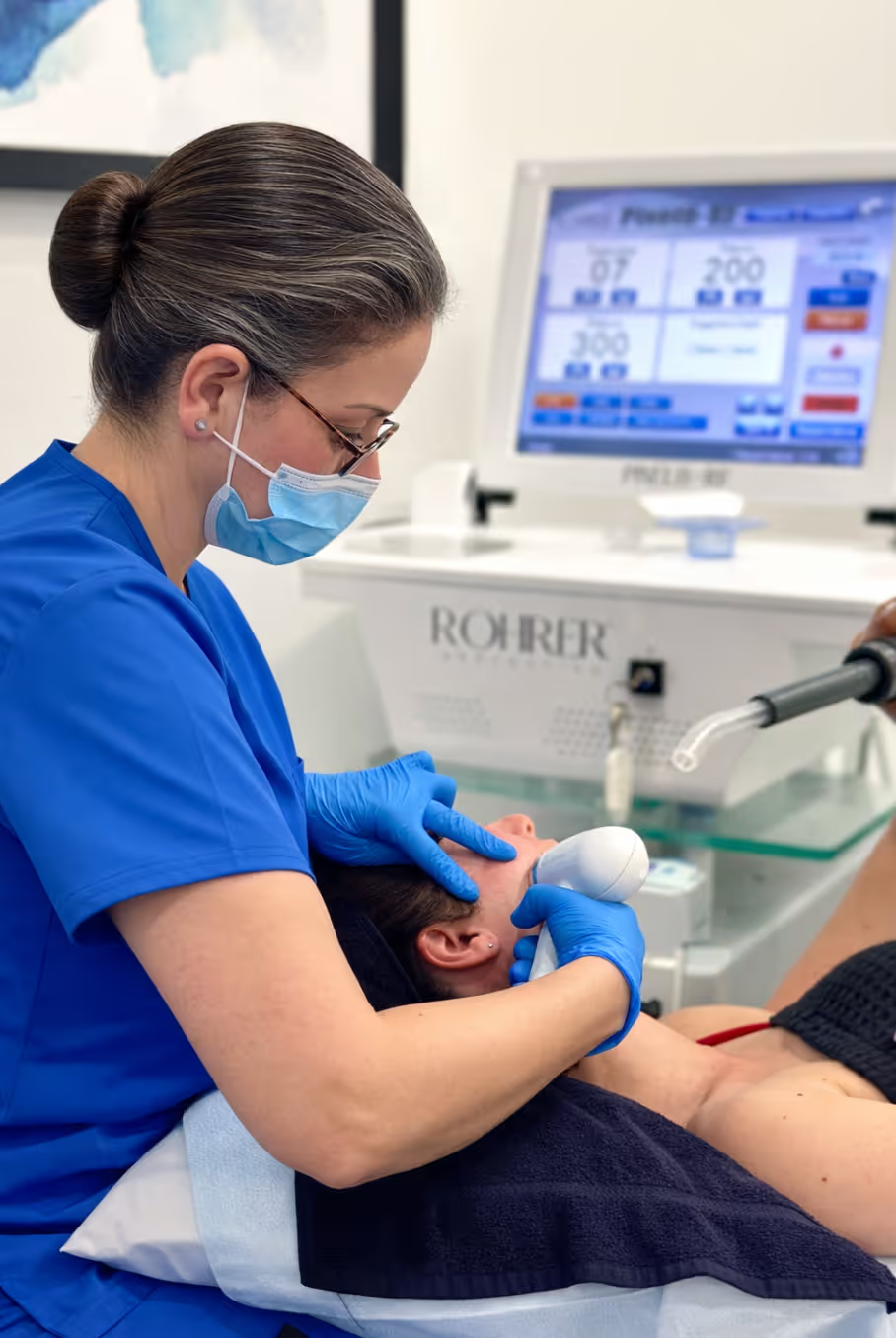
Patients who are investing in treatments like IPL photofacial for tone correction, or active resurfacing with CoolPeel fractional laser or Pixel8-RF, need to be especially deliberate about sun protection during and after their treatment cycles. These treatments create a temporary window of heightened photosensitivity — the skin is actively remodeling, and UV exposure during that period not only risks hyperpigmentation but can directly undermine the results you're working toward. It's one of the reasons we time more aggressive resurfacing treatments toward fall, when UV index drops and recovery becomes more manageable. That said, summer isn't a pause — it's when the groundwork for visible fall results gets laid through protection, antioxidants, and maintenance-level treatments that the skin can handle safely.
If you've been noticing that your tone is shifting despite a consistent sunscreen habit, or you're seeing spots and pigmentation that weren't there two summers ago, that's not a product failure. It's a signal that your skin's repair capacity needs clinical support. Our team brings 70 years of combined experience in medical aesthetics to exactly this kind of conversation — not a quick product recommendation, but a considered look at where your skin is, what's driving the change, and what combination of treatments and home care will actually move the needle. A mid-year skin check is often the most useful thing a Tysons patient can do in summer — before fall arrives and the real treatment window opens.
Start your transformation
Schedule your consultation with our knowledgeable and friendly team.