Sensitive Skin Reacts Differently to RF Microneedling After 50
By the time most of our clients reach their 50s, they've learned something important about their skin: it doesn't react the way it used to. A product that was fine for years suddenly causes flushing. Sun exposure lingers longer as redness. Healing takes an extra day or two. This isn't your imagination, and it isn't a reason to avoid radiofrequency microneedling — but it is a reason to be treated by a team that understands the difference between "sensitive" and "intolerant," and adjusts accordingly.
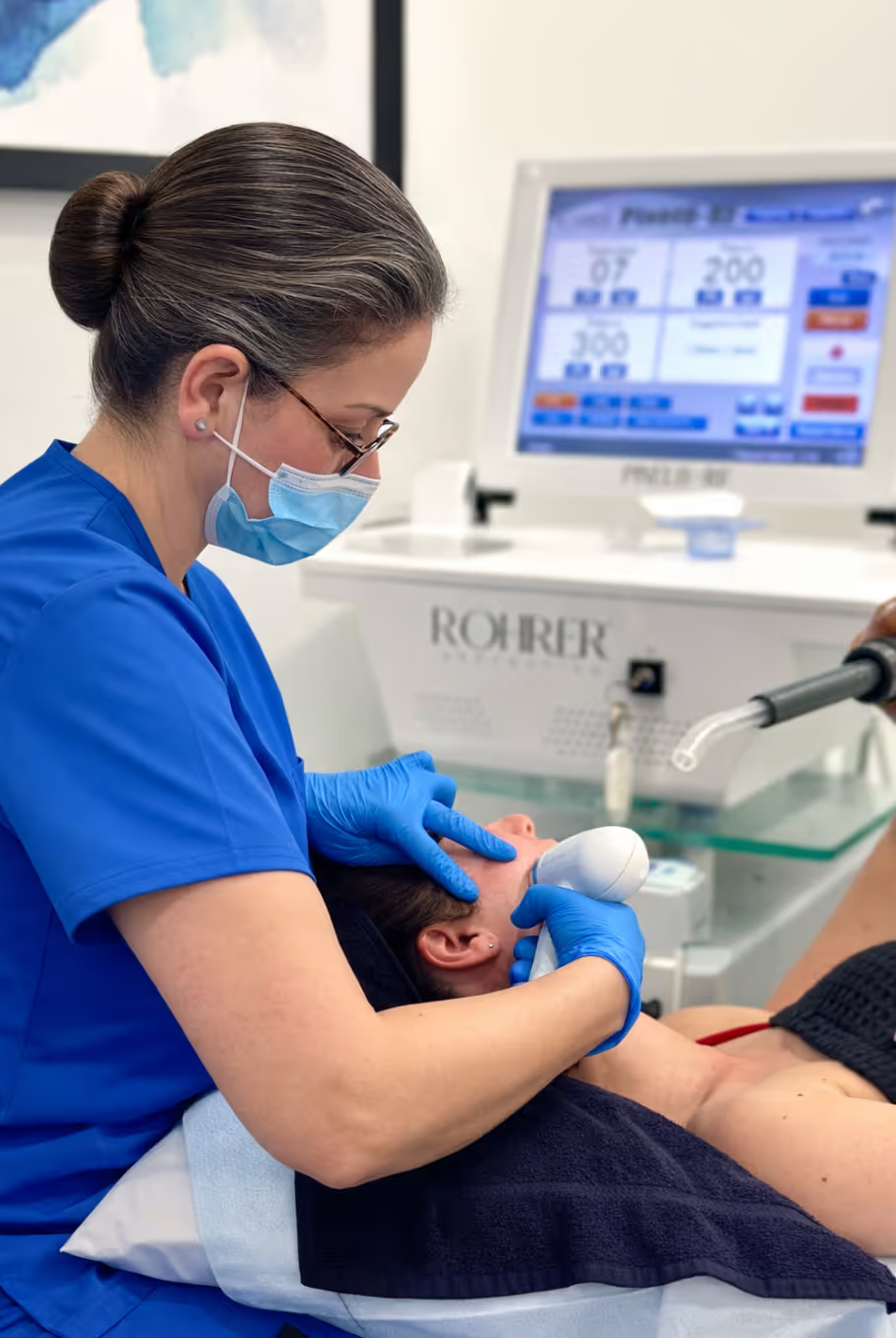
We hear the same question constantly from clients considering Pixel8-RF for the first time: does RF microneedling hurt? The honest answer is that it depends almost entirely on how the treatment is customized to your skin — and this is precisely where sensitive, post-50 skin needs a more deliberate hand. Pixel8-RF delivers radiofrequency energy through ultra-fine needles to stimulate collagen deep in the dermis, and the sensation during treatment is shaped by needle depth, energy level, and the numbing protocol used beforehand. On skin that has thinned with age, or that carries rosacea, eczema, or years of barrier damage, the same settings that work beautifully on a 35-year-old can feel sharper, hotter, and leave more visible redness afterward. We've discussed this distinction in more depth in Pixel8-RF After 50: Does Skin Type Change Your Results?, but it bears repeating here because sensitivity specifically — not just age — is its own variable.
What changes in practice: for clients with reactive or thinning skin, our aestheticians typically reduce needle depth, lower RF intensity, and extend numbing time before beginning. We also look closely at whether redness is simply thin, sun-damaged skin reacting normally, or whether it signals something that needs a different diagnosis first — a distinction we walk through carefully in Flushing, Redness, or Rosacea? Getting the Diagnosis Right First. Clients with visible capillaries or a rosacea history often do better pairing a calmer RF protocol with the gentler approach outlined in Beyond Lasers: Treating Broken Capillaries on Sensitive Skin, rather than pushing for maximum intensity on the first visit.
The sensation itself is typically described by clients as warmth and pressure, with brief, quick pinpricks during the pass — not sharp pain. With appropriate numbing and calibrated settings, most of our clients with sensitive skin tolerate Pixel8-RF comfortably and describe the following 24 to 48 hours as feeling more like a mild sunburn than anything dramatic. What we never do is treat a 52-year-old with rosacea-prone skin using the same protocol we'd use on someone with a thicker, more resilient complexion. That's the kind of calibration that comes from a team with decades of hands-on experience reading skin in real time, not just following a default device setting.
Healing also moves differently on sensitive, aging skin. If your barrier is already compromised — something we see constantly in clients coming off a stressful summer or a harsh retinol routine, as we cover in Hidden Signs Your Skin Barrier Is Failing This Summer — we often recommend a short prep period before your first session to stabilize the skin, rather than treating reactive skin at its most vulnerable. This isn't about delaying your results; it's about protecting them. Skipping proper aftercare on any skin type shortens how long results last, a pattern we detail in Pixel8-RF Results Fade Faster When You Skip This Step, and the stakes are higher when the skin underneath is already working harder to recover.
For menopausal clients specifically, hormonal shifts can thin the skin and dial up reactivity at the same time filler alone stops addressing the laxity concerns that bring most people in — a combination we explore in Menopause Skin Changes That Fillers Alone Cannot Fix. In these cases, a conservative RF microneedling protocol paired with regenerative support often outperforms an aggressive single-treatment approach. Some clients ask whether exosomes should come before or after their RF sessions, particularly when sensitivity is a concern; we address the sequencing logic in Exosomes or RF Microneedling: Which Comes First?.
If you've avoided RF microneedling because you assumed your reactive skin couldn't tolerate it, we'd genuinely encourage a consultation before ruling it out. Our team has spent years — collectively, over seven decades — learning exactly how to adjust Pixel8-RF for skin that doesn't behave predictably, and we'd rather have an honest conversation about what your skin needs than push a one-size-fits-all protocol that leaves you uncomfortable or disappointed. Sensitive skin after 50 isn't a limitation on what's possible; it's simply a detail that changes how we get there.
Start your transformation
Schedule your consultation with our knowledgeable and friendly team.