Sagging Skin Between Treatments: Maintenance That Actually Works

You've invested in a real treatment. Maybe it was Pixel8-RF, or a series of biostimulator injections, or a combination approach your provider put together specifically for your skin. You felt the difference. You saw it. And then life moved on, and somewhere between one appointment and the next, you started wondering whether things were slipping.
That's not your imagination. Skin doesn't hold results passively. It responds to what you're doing — and what you're not doing — every single day between visits. For clients in Northern Virginia, where summer humidity accelerates surface aging and winter strips the barrier bare, that between-treatment window matters more than most people realize. The regional climate alone creates real pressure on skin laxity, and without a deliberate maintenance approach, even excellent in-office results can fade faster than they should.
This isn't about spending more. It's about understanding what's actually happening in your skin after a treatment — and what a smart, sustainable routine can do to protect it.
Why Results Fade Faster Without Maintenance
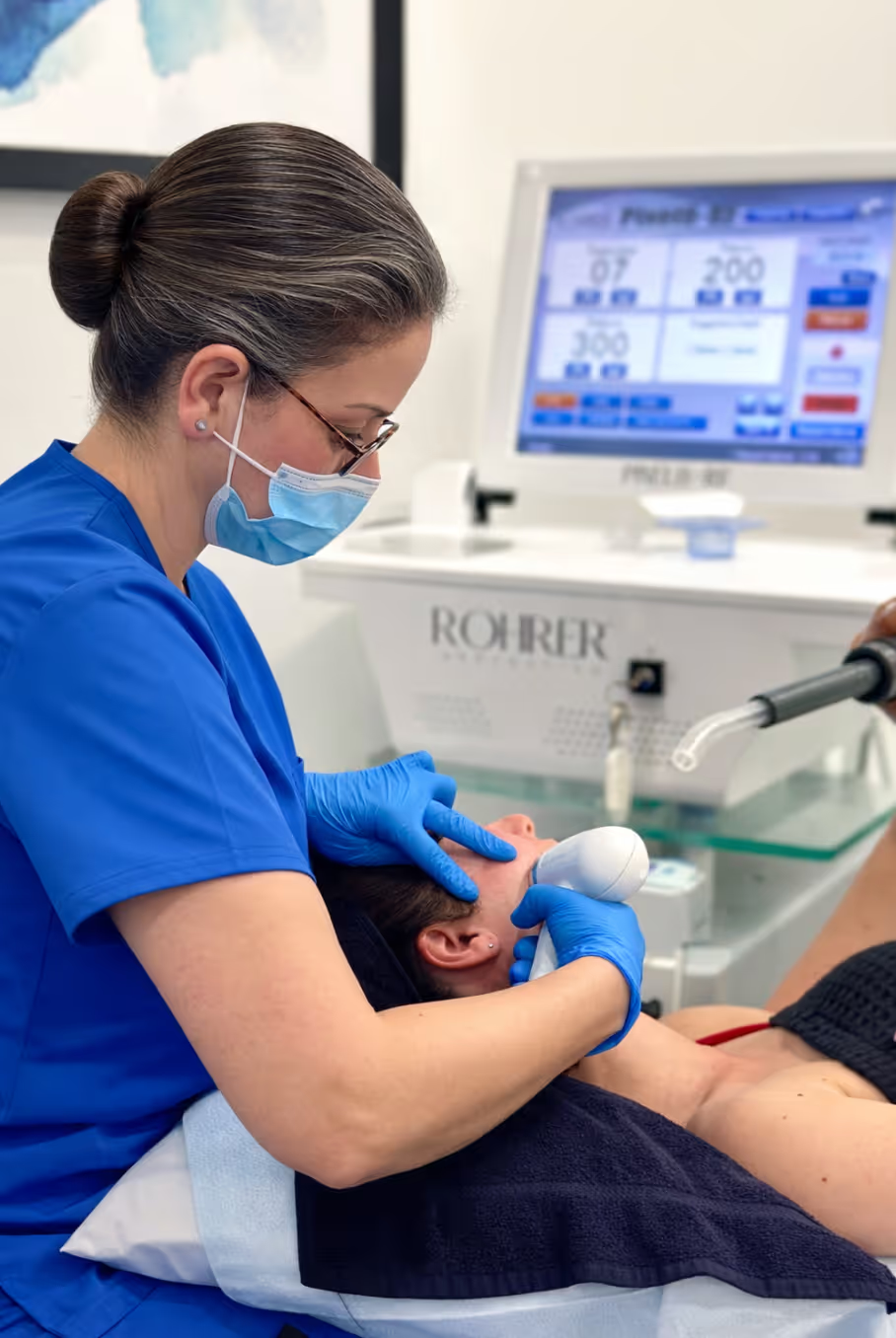
When you receive an energy-based treatment like RF microneedling, your skin initiates a wound-healing and remodeling response. Collagen synthesis accelerates. Elastin fibers reorganize. The visible improvements you notice over the following weeks are the result of that biological process running its course — not something that happens all at once and then stops. That process continues for months, but it also responds to everything your skin is exposed to in the meantime.
Sun exposure without adequate protection is the single fastest way to degrade results. UV radiation degrades collagen at a rate that no treatment can outpace if you're not protecting what's been rebuilt. In the Northern Virginia summer, where July heat compounds the damage, UV and thermal stress together create a compounding effect that most clients underestimate. SPF isn't optional maintenance — it's the floor beneath every result you're trying to preserve.
Dehydration is the second issue. Sagging skin and lax skin often look dramatically worse when it's also depleted of moisture. The barrier function that keeps water inside the skin weakens with age, and if you're not actively supporting it, the visual effects — fine lines looking deeper, skin appearing thinner, jowl definition becoming more pronounced — can mimic accelerated aging even when the underlying structure is intact. This is especially relevant between treatments aimed at tightening, where surface quality matters as much as structural improvement.
The third factor is muscle behavior. Neuromodulator results don't last indefinitely, and when the muscle activity that drives dynamic lines returns unevenly or prematurely, it can undermine work that was building beautifully. Consistent scheduling — rather than waiting until you see a full return — keeps results compounding rather than cycling through loss and recovery.
The 7 Skins Method: What It Is and Whether It Works for Sagging Skin
The 7 skins method — a Korean skincare practice involving layering multiple thin coats of toner or essence to flood the skin with hydration — has become a genuine conversation in aesthetic medicine, not just on social media. The premise is that rather than applying one heavy moisturizer, you build hydration gradually in several light layers, allowing each to absorb before the next is applied. The result, when done correctly, is deep, even moisture delivery that a single-step application rarely achieves.
For clients working on skin laxity, the 7 skins method addresses a real gap. Sagging skin is often dehydrated skin, and dehydration makes everything look worse — more crepey, more collapsed, more aged. Layering a hydrating toner or lightweight essence several times a day, particularly after cleansing when the skin is most receptive, can meaningfully improve the appearance of skin between treatments. It doesn't replace professional work. It supports it.
The important caveat: what you're layering matters significantly. A watered-down toner with fragrance and alcohol will not produce the same result as a hyaluronic acid-rich essence or a niacinamide-forward skin toner formulated for barrier support. Medical-grade products — the kind your provider recommends based on your specific skin — will outperform anything selected off a shelf without guidance. If you're not sure what to use, that conversation belongs in your next appointment.
What a Real Maintenance Routine Looks Like
Maintenance between treatments doesn't require an elaborate twelve-step system. It requires consistency in a focused set of actions that protect what's been built and continue to stimulate the skin gently on its own. For clients managing skin laxity specifically, the essential elements are these:
Daily SPF, applied correctly. Not a thin layer over makeup. A proper amount — about a quarter teaspoon for the face — applied as the last step before sun exposure, reapplied if you're outdoors for any significant amount of time. Mineral SPF is often better tolerated on skin that's been treated recently or that skews sensitive. Tinted SPF offers additional coverage and may suit Northern Virginia clients who want protection without a ghostly finish.
A retinoid at night. Medical-grade retinol and tretinoin both stimulate collagen turnover — but the difference in formulation strength matters. What you can access through a provider versus what's available over the counter isn't the same product. Used consistently, a retinoid between treatments keeps cellular turnover active, softens fine lines, and supports the structural improvements your in-office work has initiated. If you've experienced retinol purging, that's a distinct process from a true breakout — and understanding the difference determines whether you should continue or adjust.
Barrier support. Ceramide-containing moisturizers, peptide serums, and the layered hydration approach of the 7 skins method all contribute here. The goal is to keep the skin's protective layer intact so that active ingredients — your retinoid, your SPF, any treatment serums — can function as intended rather than fighting to penetrate a compromised surface.
Consistent scheduling, not reactive scheduling. Most clients who feel like their results "didn't last" are actually experiencing the gap between treatments that were spaced too far apart. Skin tightening treatments like Pixel8-RF work best in a series, with maintenance sessions timed before the improvement cycle peaks and begins to reverse — not after. A mid-year check-in is genuinely useful for assessing whether your current plan is still right for where your skin is now.
Treatments That Support Maintenance Between Major Sessions
Not every in-office visit needs to be a significant intervention. For clients managing sagging skin over time, there are options specifically suited to the between-treatment window — approaches that reinforce results, address surface quality, and keep the skin actively responding without requiring the kind of downtime a full treatment series demands.
The Oxifusion Facial is one option worth considering. It delivers oxygen, hydration, and active ingredients at a level no home skincare routine can replicate, and it works well between more intensive sessions to maintain the surface quality that makes deeper results visible. When skin is smooth, plump, and well-hydrated, structural improvements read clearly. When the surface is depleted, even excellent underlying work gets obscured.
Microcurrent is another maintenance-compatible option. The comparison between microcurrent and RF treatments is worth understanding clearly: microcurrent doesn't replicate what RF microneedling does at depth, but it supports muscle tone and surface lift between sessions in a way that's gentle enough for regular use. For clients in the 40–60 range managing progressive laxity, pairing major treatments with periodic microcurrent sessions creates continuity that a treatment-only-when-necessary approach can't match.
Skin boosters and polynucleotides are increasingly popular as between-treatment investments. The distinction between these two approaches matters — polynucleotides work at the cellular level to stimulate regeneration, while traditional skin boosters focus on hyaluronic acid delivery for surface hydration. Both have a role in a maintenance plan, but the right choice depends on what your skin actually needs, which is a conversation best had with your provider rather than made based on what's trending.
When Maintenance Isn't Enough Anymore
There's an honest limit to what maintenance can do. If sagging skin has progressed to a point where the structural deficit is significant — true volume loss versus skin laxity have different underlying causes that require different solutions — no amount of excellent home care will close that gap. The 7 skins method keeps dehydrated skin looking better. It doesn't replace collagen that has genuinely been lost.
This is why the cost of waiting matters. Skin that is maintained consistently between treatments responds better when those treatments are performed. Skin that has been left without support for extended periods requires more intervention to achieve a comparable result — and some of that ground is simply harder to recover.
If you're noticing that your results feel shorter-lived than they used to, or that maintenance alone isn't holding what your last treatment achieved, that's useful information. It may mean the treatment interval needs to be shortened. It may mean the approach needs to evolve — combining treatments that work at different structural levels rather than repeating the same single modality. Or it may mean it's time to have a more comprehensive conversation about where your skin is and what it actually needs now.
At Tysons Elite Esthetics, that conversation is where we start — not with a menu of treatments, but with a genuine understanding of what's happening in your skin and what a plan that makes sense for your life actually looks like. The team's 70+ years of combined experience means the guidance you receive is grounded in what works over time, not what's popular right now.
Maintenance that actually works isn't complicated. But it does require the right information — and a provider relationship built on more than a single appointment.
Start your transformation
Schedule your consultation with our knowledgeable and friendly team.